Canada's Search for Global Purpose Meets Energy Reality
For decades, Canada has been searching for a meaningful role on the world stage—not merely a slogan or symbolic posture, but a substantial, enduring contribution that would secure its relevance among nations shaping economic and military power. This ongoing quest is now colliding directly with the hard realities of the global energy system, creating both challenges and unprecedented opportunities.
Geopolitical Instability Reveals Strategic Vulnerabilities
The global energy landscape has been fundamentally reshaped by recent geopolitical events. Iran's active targeting of critical Gulf infrastructure, combined with the weaponization of the Strait of Hormuz, has disrupted one of the world's most vital energy corridors. Approximately one-fifth of global oil supply traditionally passes through this narrow channel, which has transformed from a commercial route into a powerful lever of coercion.
This Persian Gulf vulnerability follows closely on the heels of Russia's invasion of Ukraine, which exposed Europe's dangerous dependence on Russian energy supplies. The resulting realignment has been both costly and urgent for European nations. Together, these twin shocks have revealed a structural weakness at the very core of the global economy: over-reliance on unstable suppliers and fragile chokepoints that can be weaponized during international conflicts.

Canada's Missed Opportunity for Strategic Positioning
In this context, Canada's long-running search for relevance has transformed from an abstract diplomatic exercise into an immediate strategic imperative. Middle powers do not sustain international influence through rhetoric alone—they maintain relevance by delivering tangible capabilities that matter to the global system, reliably and at significant scale.
Canada has too frequently substituted narrative for substantive strategy, leaning on legacy identities while underdeveloping the hard assets that confer genuine relevance: robust energy infrastructure, substantial export capacity, and forward-looking strategic foresight. Energy represents perhaps the clearest example of this strategic gap.
When German Chancellor Olaf Scholz visited Canada in 2022 seeking alternatives to Russian natural gas, he was offering more than a simple bilateral business opportunity. This represented an invitation for Canada to anchor itself firmly within a reconfigured Western energy architecture—a chance to become a reliable energy partner to democratic allies during a period of unprecedented need.
The Consequences of Strategic Deferral
Canada declined this opportunity—politely but decisively. The rationale followed familiar patterns: no immediate business case, insufficient infrastructure, and extended development timelines. While technically accurate, these reasons represent the accumulated consequences of policy choices that consistently prioritized process over strategic positioning and deferred the development of national capacity.
This was not merely a missed commercial opportunity—it represented a failure of strategic intent. At precisely the moment when the Western alliance sought to reduce dependence on Russia and hedge against instability in the Persian Gulf, Canada found itself unable to respond effectively. The limitation stemmed not from resource scarcity, but from insufficient preparation and infrastructure development.
Internal Vulnerabilities Mirror External Challenges
Canada's strategic absence extends beyond export markets and reflects internal vulnerabilities as well. The ongoing uncertainty surrounding the Line 5 pipeline—a critical conduit supplying energy to central Canada through the United States—underscores the fragility of an energy system where even domestic security depends on external decisions. A nation that cannot guarantee the resilience of its own supply lines is poorly positioned to support the energy security of its allies.

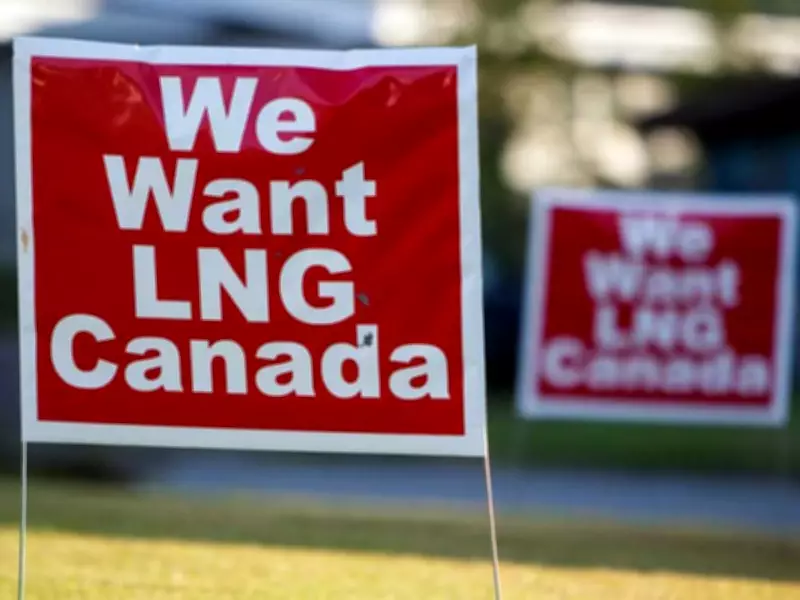
The signs reading "We Want LNG Canada" that appeared in Kitimat, British Columbia back in 2016 captured a growing recognition of this strategic imperative. As global energy dynamics continue to shift, Canada faces a clear choice: continue deferring strategic energy development, or embrace the opportunity to become a reliable energy supplier to democratic allies—thereby securing the concrete, enduring global relevance it has sought for generations.