Oil Prices Experience Dramatic Plunge Following Trump's Iran Peace Talks Announcement
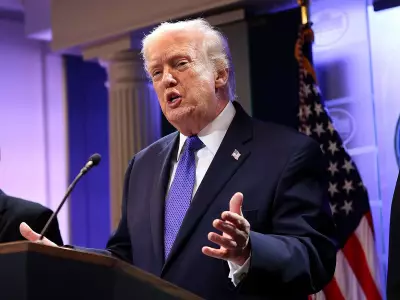
Global oil markets witnessed one of the most significant intraday price swings on record as Brent crude futures plummeted sharply on Monday. The dramatic decline followed President Donald Trump's announcement that his administration had engaged in discussions aimed at resolving the ongoing conflict with Iran, though Tehran swiftly denied any such dialog existed.
Market Turmoil and Price Swings
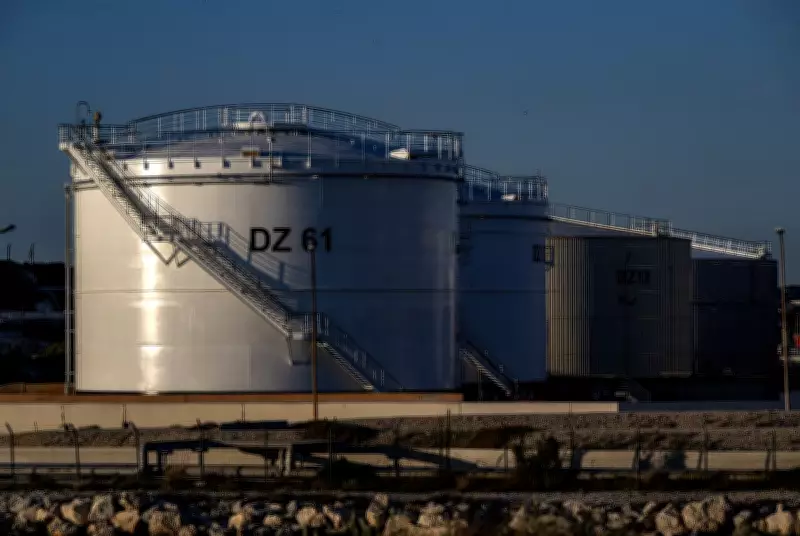
Brent crude fell as much as 14 percent shortly after Trump made his announcement via his Truth Social network, sliding to US$96 per barrel. Prices recovered some of those losses after Iran's denial, only to resume their downward trajectory when the President told Fox Business that a potential deal could materialize within days. This volatility represents the latest in a series of enormous price movements that have exhausted oil traders since the conflict began in late February.
Remarkably, four of the six largest price swings ever recorded in Brent futures have occurred since the Iran conflict started, highlighting the extreme uncertainty gripping energy markets. Europe's natural gas benchmark also experienced significant declines before paring most of its losses during the same trading session.

Geopolitical Context and Supply Disruption
The energy markets have been pitched into turmoil since the Iran conflict began, with the vital Strait of Hormuz waterway effectively blocked. This de facto closure has disrupted approximately one-fifth of the world's oil supply and a similar portion of global liquefied natural gas shipments. The International Energy Agency has characterized the current crisis as the largest oil supply disruption in recorded history.
United States officials have been actively attempting to calm energy markets in recent weeks, with Trump's Monday remarks representing the latest in a series of comments apparently designed to tame prices. Beyond verbal interventions, the U.S. has also announced a release of emergency oil reserves and waived certain sanctions on Iranian and Russian barrels in an effort to offset some of the supply lost due to the Hormuz blockage.
Analyst Perspectives and Market Reactions
"The market is in utter chaos," analysts at brokerage PVM Oil Associates Ltd. noted in a research briefing. They described Trump's latest social media post as "a clear sign of conceding to market forces, rallying oil prices and falling equities."
Bjarne Schieldrop, chief commodities analyst at SEB AB, observed that "Trump is plainly trying to talk down the price," while noting that "reopening Hormuz is up to Iran and not down to Trump's policies."
Conflicting Statements and Diplomatic Maneuvers
Trump stated on Truth Social that the United States had held productive conversations regarding a complete resolution of hostilities in the Middle East. He later elaborated to Fox Business that Steve Witkoff, Jared Kushner, and their counterparts were involved in these discussions, which could potentially yield an agreement within five days.
However, Iran's state-run Mizan news agency cited a foreign ministry statement asserting there are no talks between Tehran and Washington. Other Iranian media services similarly reported that no discussions were taking place. This conflicting narrative between U.S. claims and Iranian denials has contributed significantly to market uncertainty.
The price volatility follows Trump's Friday statement that he was considering "winding down" U.S. military efforts, while simultaneously giving Iran 48 hours to reopen the Strait of Hormuz and threatening attacks on the country's power plants if compliance wasn't forthcoming. These geopolitical tensions continue to create an unpredictable trading environment for energy commodities worldwide.