Alberta's provincial government is expected to submit an application to Ottawa on Thursday for preliminary approval of a new oil pipeline to the West Coast. The federal government will then have until early September to grant tentative approval and add the pipeline to the list of "projects of national interest," a designation meant to speed formal approval.
However, columnist Lorne Gunter argues this process resembles a game of three-card monte, the classic confidence game where observers are tricked into predicting which card is the "money card," only to discover the dealer has already palmed it away. He questions whether the application is anything more than another outline full of aspirations, pledges, and a "paper pipeline."
Conditions from November MOU remain unmet
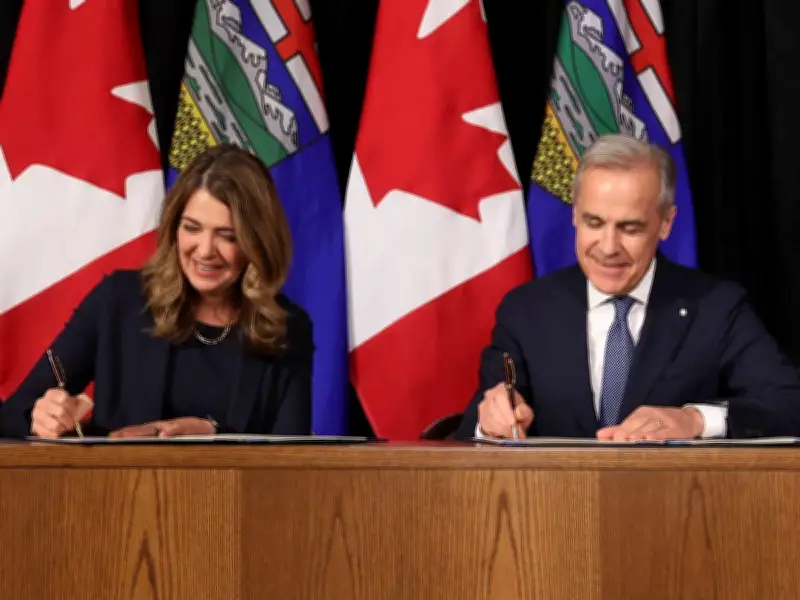
Last November, Alberta Premier Danielle Smith and Prime Minister Mark Carney signed a memorandum of understanding with numerous conditions attached. Alberta oil companies were required to build a major carbon capture scheme to reduce carbon emissions almost entirely by 2050, with methane emissions reduced even faster, by 2035. Alberta was also to find private investors to finance both the pipeline and the carbon capture network, and to work out a route with buy-in from First Nations along the line and the British Columbia government.

According to reports, all that will be submitted to the Carney government is an unspecified "corridor" for the pipeline. There appears to be no industry agreement on paying for and building the carbon capture scheme, no private investors secured, and no First Nation has stepped forward to approve a line across their territory. Gunter asks, "So what's changed in the last eight months?" and answers, "Nothing of importance."
Political motivations behind the façade
Both the provincial and federal governments appear committed to the façade of progress for their own political reasons. Prime Minister Carney seems genuinely worried about sparking a national unity crisis if he appears unwilling to have a pipeline built. In a video posted Tuesday, Carney said the Trudeau-era climate plan was "too expensive" and would have been "divisive."
Gunter speculates about Carney's true intentions: "Is he just going along with the Alberta government's ambitions to avoid a separation crisis in Alberta or does he genuinely want to see another pipeline to feed Asian markets?" He questions whether Carney is playing along until the project collapses under its own weight, avoiding blame for killing it.
Signs of genuine support?
There are some signs that Carney's support is real, such as his decision to move the approval process from the Impact Assessment office—which Gunter calls the "No More Pipelines agency"—to the federal energy regulator. This change makes approval of a new pipeline more plausible than under the Trudeau regulators.
Despite this, Gunter remains skeptical, noting that the pipeline project still lacks critical elements: private investment, First Nations agreements, and a concrete carbon capture plan. Without these, he argues, the application is more about political performance than real progress toward getting oil to Asian markets.