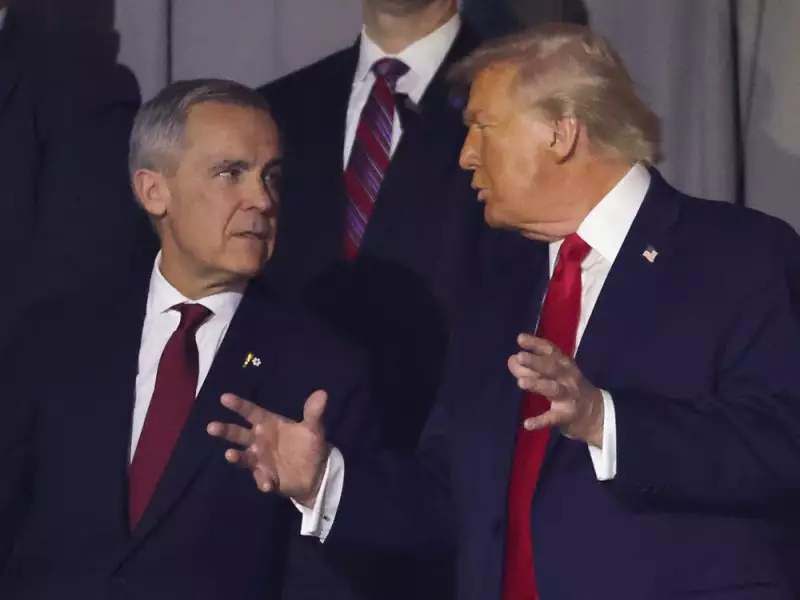
In a notable show of support, former U.S. President Donald Trump has publicly endorsed Prime Minister Mark Carney's newly signed trade agreement with China, calling it a "good thing." The comments, made on Friday, January 16, 2026, as Trump departed the White House, mark a significant moment in trilateral trade dynamics.
Trump's Unexpected Endorsement
When questioned by reporters about the pact between Ottawa and Beijing, Trump offered a straightforward assessment. "It's OK. It's what he should be doing. It's a good thing to sign a deal," the former president stated. He added, "If you can get a deal with China, you should do that." This endorsement comes despite Trump's own administration's historically tough stance on trade with China and its imposition of tariffs on Canadian goods.
Details of the Canada-China Agreement
The deal, finalized on Friday, centers on a mutual reduction of tariffs. Canada has agreed to lower tariffs on a range of Chinese-made electric vehicles (EVs). In return, China will cut duties on several Canadian agricultural exports, including canola. This agreement represents a strategic pivot for Canada, seeking reliable trade avenues amid ongoing friction with its southern neighbour.

Prime Minister Carney, speaking after a multi-day visit to Beijing, framed the pact as a "new strategic partnership" that benefits both nations. He notably characterized China as a "more reliable and predictable trading partner" compared to the United States at this juncture, while acknowledging the deeper, broader relationship with the U.S.
U.S. Criticism and Broader Implications
Not all American voices were supportive. U.S. Trade Representative Jamieson Greer expressed criticism of the deal's provisions on Chinese EVs. "I think it's problematic for Canada," Greer told CNBC. "There's a reason why we don't sell a lot of Chinese cars in the United States. It's because we have tariffs to protect American auto workers and Americans from those vehicles."
This trade deal underscores a deliberate shift in Canadian trade policy as the federal government navigates the economic pressures of U.S. tariffs reinstated under the Trump administration. The move signals Ottawa's intent to diversify its economic partnerships and secure stable markets for key exports like canola, which has faced trade barriers in the past.
The contrasting reactions from Trump and his trade official highlight the complex and often contradictory nature of international trade politics. For Canada, the agreement with China offers both an economic opportunity and a point of strategic divergence from its largest trading partner.