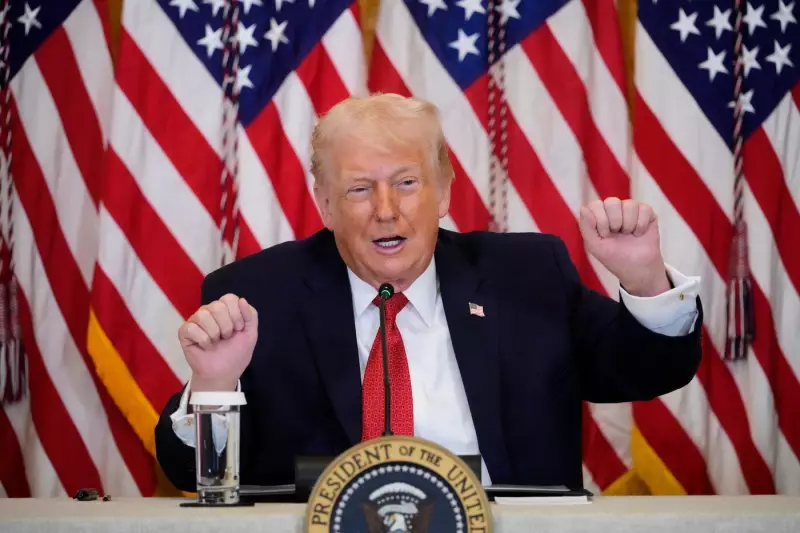
Former U.S. President Donald Trump has issued a stark warning to the international community, suggesting he may use punitive tariffs against nations that refuse to support American control over Greenland. The statement was made on January 16, 2026, during an event at the White House focused on rural health care investment.
The Greenland Ultimatum and Trade Leverage
Trump's comments directly link U.S. trade policy with geopolitical ambitions. He indicated that countries opposing Washington's efforts to control the vast, strategically important Arctic island could face significant economic penalties in the form of import taxes. This approach frames international trade relations as a tool for securing territorial and political objectives, a recurring theme from his previous administration.
Context and Broader Implications
The statement comes amidst other significant international trade developments, including a landmark tariff-quota deal between Canada and China on electric vehicles and canola, brokered by Canadian officials. Trump's proposition raises immediate questions about the stability of global trade norms and the potential for escalating economic disputes rooted in political, rather than purely commercial, disagreements. Analysts are weighing the impact such a policy could have on allies and trading partners worldwide.

The use of tariffs as a punitive diplomatic instrument marks a significant escalation in rhetoric concerning Greenland, a semi-autonomous territory of Denmark. This stance could recalibrate Arctic geopolitics, where control over resources and shipping routes is increasingly contested. The threat underscores a willingness to leverage America's economic might to advance strategic national interests, potentially disrupting existing alliances and trade flows.
Potential Fallout and Next Steps
While the statement outlines a conditional threat, its mere articulation injects considerable uncertainty into international diplomatic and economic circles. Trading partners may now have to factor in political allegiance on specific issues like Greenland when assessing their economic relationship with the United States. This move could prompt nations to diversify trade partnerships and strengthen regional blocs as a buffer against such unilateral economic measures.
The world will be watching closely to see if this proposition translates into concrete policy, and how targeted nations might respond. The development signals a potential new chapter where trade wars are fought not just over steel, aluminum, or subsidies, but over fundamental questions of sovereignty and geopolitical influence.