Aventis Energy Intersects Anomalous Radioactivity in Multiple Drill Holes at Corvo Uranium Project
VANCOUVER, British Columbia, April 20, 2026 – Aventis Energy Inc. (CSE: AVE | FRA: C0O0 | OTC: VBAMF) has successfully concluded its inaugural drill program at the Corvo Uranium Project, located near Wollaston Lake in northeastern Saskatchewan. The program, designed to test high-priority target areas, has yielded promising results with multiple intervals of anomalous radioactivity detected across several drill holes.
Drill Program Highlights and Preliminary Findings
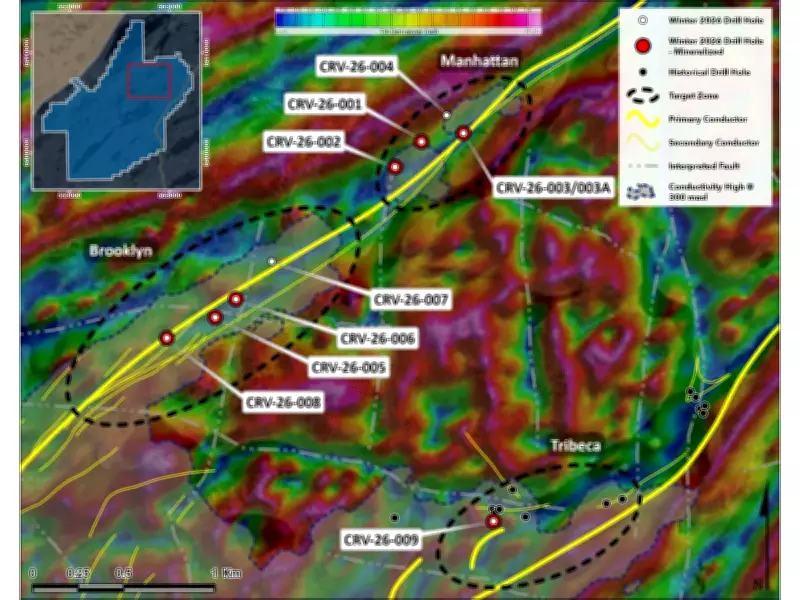
The winter 2026 drill program, operated by Standard Uranium Ltd. under an option agreement, involved a total of 2,457 metres drilled across ten reconnaissance holes. These holes targeted the Manhattan, Brooklyn, and Tribeca areas, which were identified through advanced geophysical surveys and geological modeling.
Key results from the program include:

- Anomalous radioactivity exceeding 300 counts per second was intersected in seven of the ten drill holes.
- A cumulative total of twenty-three metres of composite radioactivity was recorded across all intervals.
- The radioactive intervals are hosted within pegmatite, paragneiss, and granitoid orthogneiss units, with structural settings such as hydrothermally altered fault zones and quartz-carbonate veining—indicators consistent with uranium mineralization in the Athabasca Basin region.
Michael Mulberry, Chief Executive Officer and Director of Aventis Energy, commented on the findings, stating, "Our first round of drilling at Corvo returned twenty-three metres of cumulative radioactive intervals across ten holes, reinforcing the Project's exploration potential. Backed by Standard, we are in a strong position to build on these early results through expanded exploration efforts and additional drilling."
Exploration Context and Future Plans
The Corvo Project is currently under a three-year earn-in option agreement with Standard Uranium Ltd., allowing Aventis to earn a 75% interest by funding CAD$6 million in exploration expenditures over three years. The winter 2026 program was fully funded by Aventis and marks the initial phase of testing the project's uranium prospects.
Geochemical assays of drill core samples are still pending, which will provide further insights into the uranium content and mineralization quality. Despite the early success, several priority uranium targets remain untested along more than 25 kilometres of strike length. The company is already planning additional surface exploration and a second phase drilling program to follow up on the radioactive intervals and continue evaluating regional targets.
The program utilized data from a Project-wide Time-Domain Electromagnetic survey, a 5,185-station ground gravity survey, and surficial geological information to define the high-priority areas. One drill hole was restarted due to challenging ground conditions, but overall, the program proceeded smoothly, with structural corridors remaining open along strike for further investigation.
This development underscores the growing interest in uranium exploration in Saskatchewan, a region known for its rich mineral resources. As global demand for nuclear energy rises, projects like Corvo could play a crucial role in securing future uranium supplies.