Calgary's Downtown Office Market Finds Stability Through Strategic Conversions
A significant wave of oil and gas industry consolidation has continued to impact Calgary's downtown office landscape, yet innovative conversion programs are providing much-needed stability to a market that has experienced considerable turbulence over the past decade. The interplay between corporate mergers and adaptive reuse strategies is reshaping the city's core commercial real estate sector.
The Ripple Effect of Oilpatch Consolidation
When one energy company acquires another, the combined entity typically requires less physical office space than the two separate organizations previously occupied. This fundamental reality has created ongoing challenges for Calgary's downtown office market, particularly following the oil price collapse that began in 2014. The resulting industry consolidation has systematically reduced demand for traditional corporate headquarters space in the city's core.
City assessment data reveals the tangible impact of these market forces. The total assessed value of downtown office properties south of the Bow River has declined approximately 14 percent over the past five years, dropping to $7.7 billion for the 2026 tax year from $8.3 billion in 2025. This represents a continuation of a longer-term trend that saw downtown office values plummet from their peak of over $21 billion in 2016 to roughly half that amount within just four years.

Conversion Programs Provide Market Stabilization
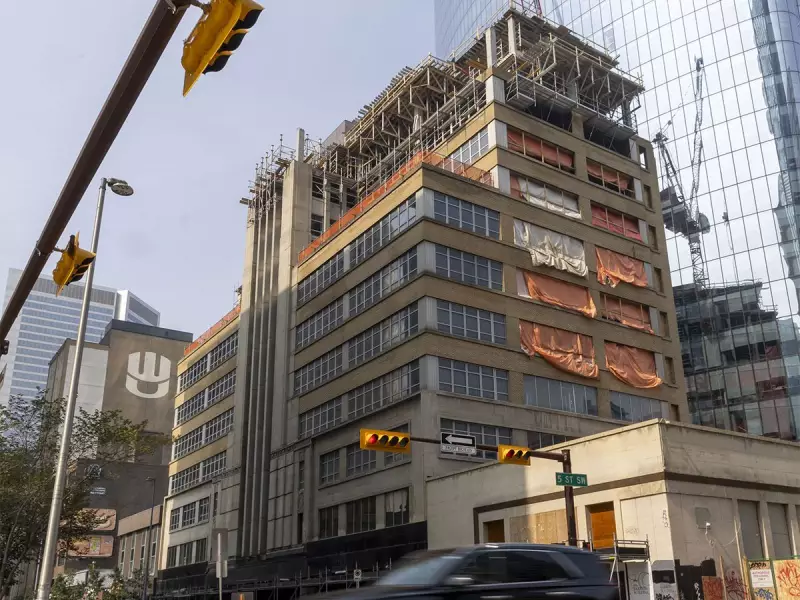
Calgary's strategic response to high vacancy rates has centered on incentivizing property owners to convert underutilized office towers into alternative uses. The city's conversion program encourages the transformation of vacant office properties into residential units, hotel accommodations, or post-secondary educational spaces. This adaptive approach has helped prevent further erosion of the downtown tax base while breathing new life into previously empty buildings.
"We have seen the downtown stabilize," noted city assessor Eddie Lee in a recent interview. "We are optimistically looking for increases within the office sector, but it's really, really hard to say what the future holds." The conversion initiative has generated additional tax revenue from properties that might otherwise have continued declining in value and utilization.
Mixed Signals in Current Market Conditions
The downtown office market presents a complex picture with both encouraging and challenging indicators. Overall vacancy rates have remained relatively stable over the past year, while rental rates have increased for some newer, higher-quality properties. However, several office building sales have occurred at prices slightly below municipal valuations, suggesting continued market softness in certain segments.
Individual property assessments reveal varying trajectories. The Bow tower's valuation has increased from $681 million in 2021 to $771 million currently, remaining essentially flat from the previous year. Eighth Avenue Place has seen its assessment climb to nearly $780 million from $699 million over the same five-year period, while Brookfield Place increased to $568 million from $479 million.
"The truth is the market is actually getting better, especially in the AA class space," observed Kyle Fletcher, a principal at global tax services provider Ryan ULC. "Rents are on the rise, vacancy is actually dropping." This perspective suggests that quality differentiation is becoming increasingly important in Calgary's recovering office market.
Historical Context and Future Outlook
The current stabilization represents a welcome development following a decade of significant challenges. The initial downturn began with collapsing global oil prices, widespread industry layoffs, and accelerating corporate consolidation. These factors combined to dramatically reduce demand for downtown office space well before the pandemic introduced additional complications.

Since 2021, the total assessed value of office towers south of the Bow River has stabilized in the $8 to $9 billion range, suggesting the market may have found a new equilibrium. The number of office buildings in the core has decreased by nearly 14 percent over the past five years, roughly matching the decline in total assessed value and indicating a rationalization of the downtown office inventory.
As Calgary continues to navigate the ongoing transformation of its energy sector and downtown core, the strategic conversion of underutilized office space appears to be providing crucial stability. The market's ability to adapt through innovative reuse strategies may ultimately determine how successfully Calgary transitions its downtown from an era dominated by traditional corporate headquarters to a more diversified urban center.