Canada's Housing Market Faces Fourth Year of Declines with No Bottom in Sight
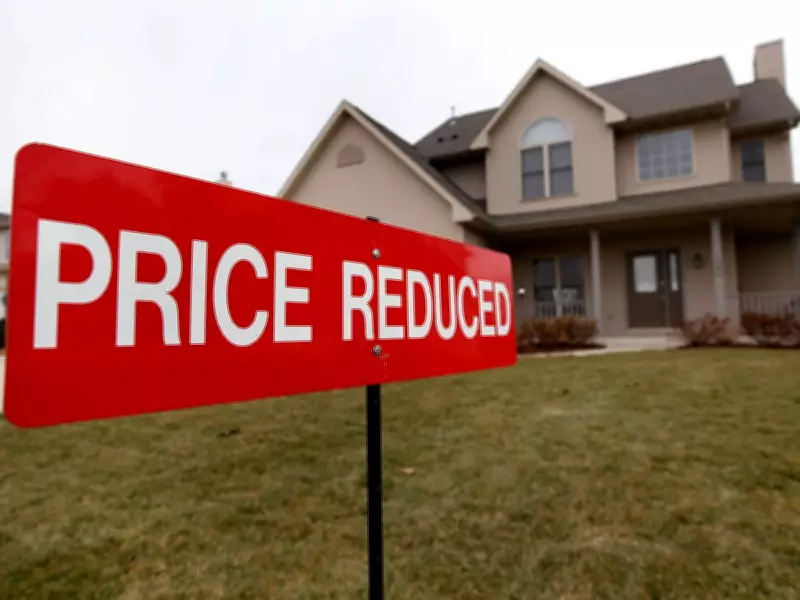
Canadian home prices have been steadily declining for four consecutive years since the peak of the pandemic-driven housing boom, with no signs of reaching a bottom yet. March 2026 brought no relief, as sales during what is typically the busiest season for real estate plummeted to their lowest level in 17 years.
Economic Factors Driving the Downturn
According to Robert Hogue, assistant chief economist at Royal Bank of Canada, the national composite MLS Home Price Index remains firmly entrenched in a four-year decline. Prices have dropped 4.7% from a year ago and are down a staggering 20% from the cyclical peak recorded in early 2022. Hogue noted that the recent data shows prices slipped another 0.4% in March compared to the previous month.
Economic uncertainty stemming from geopolitical conflicts and trade tensions has been discouraging buyers for some time. Now, rising mortgage rates are adding further pressure to the market. Bradley Saunders, North America economist for Capital Economics, explained that fixed mortgage rates have been climbing due to increased government bond yields, driven in part by higher oil prices resulting from international conflicts.

"Things are likely to get worse before they get better," Saunders warned, indicating that the recent rebound in borrowing costs suggests home prices will continue to fall in the coming months.
Regional Variations and Market Impacts
The housing correction is most severe in Ontario and British Columbia. The home price index has declined 7.4% year-over-year in the Greater Toronto Area and 6.8% in Vancouver. Other markets are also experiencing significant drops:
- Kitchener-Waterloo: Prices down 8.6%
- Barrie: Prices down 8.4%
- London, Ontario: Prices down 7.1%
- Fraser Valley, B.C.: Prices down 7.5%
Almost all of these markets saw further monthly declines in March. Even Alberta has not been immune, with home price indices dropping nearly 3% in both Edmonton and Calgary.
However, some markets with tighter supply are bucking the trend. Prices have increased more than 10% in Quebec City, 11% in Moncton, and over 9% in Newfoundland and Labrador.
Revised Forecasts and Future Outlook
The rise in government bond yields has pushed the average five-year fixed mortgage rate above 4%, with further increases possible. This has led the Canadian Real Estate Association to downgrade its sales and price forecasts. The association now expects home sales to rise just 1% in 2026, a significant reduction from the 5.1% growth projected in January.
The national average home price forecast has been lowered to $688,955, compared to the $698,881 projected earlier this year.
Hogue suggests there is still hope for recovery if lower prices attract more buyers and inventory levels decrease. However, he also warns of growing risks that could prolong the slump, including global conflicts, high energy prices, and fragile job markets.
The prolonged housing market decline represents one of the most significant economic challenges facing Canadian homeowners and prospective buyers in recent memory. With mortgage rates continuing to climb and economic uncertainty persisting, the path to recovery remains uncertain and potentially distant.