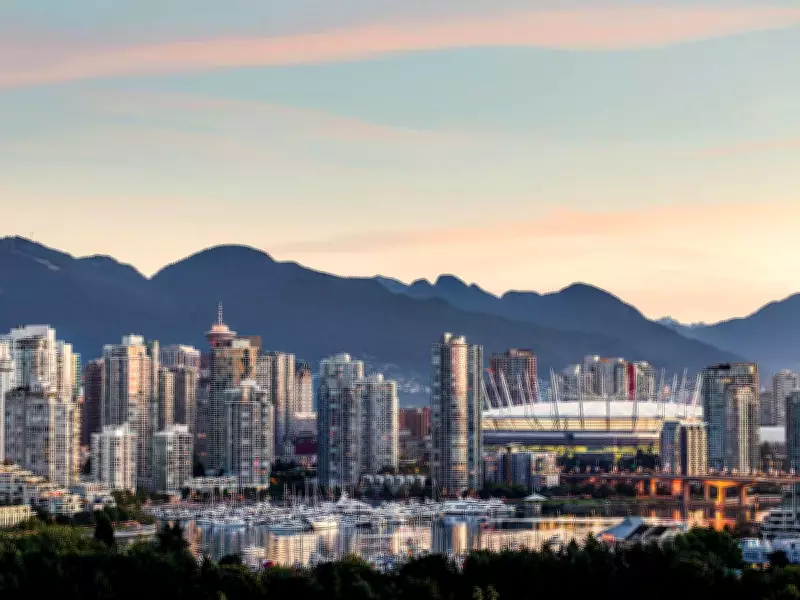
Metro Vancouver's regional board is currently engaged in critical discussions regarding potential reductions to development cost charges and the subsequent financial implications for the region. The board is examining various strategies to compensate for an anticipated revenue shortfall that could reach as high as $389 million over a five-year period, depending on the chosen approach.
Exploring Financial Alternatives
The board is considering multiple avenues to address the funding gap that would result from lowering development fees. These possibilities include increasing household taxes or utility rates, postponing certain capital infrastructure projects, or opting for increased borrowing to cover the shortfall. Each option carries distinct consequences for residents and regional services.
Development Cost Charge Background
Development cost charges represent fees that developers must pay when constructing and selling new housing units within the region. These funds are specifically allocated toward essential infrastructure projects, including water and sewer system improvements and the acquisition of parkland for community use. The current debate stems from growing pressure from the development sector to reduce these charges.

Two Primary Scenarios Under Consideration
Metro Vancouver staff have presented the board with two distinct scenarios for development cost charge adjustments, each with different financial implications:
First Scenario: Significant Rollbacks
In response to developer concerns, the board previously requested staff to explore rolling back planned 2026 rate increases to 2025 levels while simultaneously reducing planned 2027 rate increases. This approach would create the larger projected funding gap of $389 million over five years.
To address the initial $15 million shortfall in 2026 under this scenario, staff suggest utilizing reserve funds. For subsequent years from 2027 to 2031, they propose increasing property taxes for existing residential property owners by an average of $30 in 2027, $23 in 2028, and $7 in both 2029 and 2030.
Second Scenario: More Moderate Approach
The alternative scenario involves maintaining the planned increase to developer cost charges in 2026, then freezing rates at 2026 levels throughout 2027. This would result in a smaller funding gap of $246 million over five years. For this scenario, staff have suggested the same three offsetting options, though property tax increases would be less substantial than in the first scenario.
Additional Funding Considerations
Beyond property tax increases, Metro Vancouver could potentially increase long-term borrowing for water and sewer projects, though this would mean allocating more funds toward interest payments over time. Another possibility involves delaying critical infrastructure projects, though staff caution that this approach "would introduce significant risk to the timely delivery of critical regional services to growing communities in the region."
Development Sector Perspective
The Urban Development Institute, representing developers across the region, has advocated for reducing development cost charges while opposing any increase in property taxes. In a recent letter to the Metro board, the institute's interim CEO, Michael Drummond, argued that new water and sewer infrastructure should be amortized over its useful economic life of 50 to 100 years rather than the current 15 to 30-year repayment periods.
"These are assets with 50- to 100-year lifespans currently being paid off over 15 years or 30 years in the case of the North Shore wastewater treatment plant," Drummond wrote. He suggested that infrastructure should be financed similarly to how B.C. Hydro finances its projects through long-term debt, which would dramatically reduce upfront charges without shifting the financial burden to existing taxpayers.
Ongoing Tensions and Future Decisions
The development sector has been engaged in ongoing discussions with Metro Vancouver since the original plan to increase development cost charges in 2026 was proposed. While developers support rolling back rates, they remain strongly opposed to any increase in property taxes as a compensating measure.

The Metro Vancouver board faces complex decisions that will balance the interests of developers seeking reduced fees with the region's need to fund essential infrastructure projects that support growing communities. The outcome of these deliberations will have significant implications for housing development, taxpayer burdens, and regional service delivery throughout Metro Vancouver.