Wellness Retreats Spark Rural Real Estate Renaissance Across Canada
In an era marked by uncertainty and rapid change, Canadians are increasingly prioritizing fundamental needs such as physical health, mental well-being, and restorative environments. This profound shift in values is now reshaping the nation's real estate landscape, particularly in rural areas where sprawling properties are being transformed into wellness retreats and holistic sanctuaries.
Pandemic Legacy Fuels Countryside Migration
The COVID-19 pandemic served as a catalyst for thousands of urban dwellers to abandon city life in favor of rural settings, creating a sustained surge in countryside real estate that continues to evolve. What began as a temporary escape has matured into a permanent reorientation toward wellness-focused living and business opportunities.
Canada's wellness tourism market is projected to reach an astonishing US$80 billion by 2030, according to Grand View Research Inc., representing a dramatic increase from US$30 billion in 2022. The Global Wellness Institute recently ranked Canada's wellness economy as the eighth largest globally, with values soaring 33 percent since before the pandemic.

Real Estate Sector Experiences Unprecedented Growth
This burgeoning demand is manifesting directly in property markets. The Global Wellness Institute reports that Canada's wellness real estate sector expanded to US$11.8 billion in 2022, approximately double its 2019 value, with sustained annual growth rates around 20 percent.
While much activity concentrates in established resort destinations, a quieter transformation is unfolding across rural markets nationwide. Properties previously serving as private residences or modest hospitality businesses are increasingly being marketed—and in many cases, fundamentally repositioned—as wellness retreats, glamping sites, or hybrid lifestyle-income properties.
Case Study: Finding Tranquility in Ontario's Almaguin Highlands
Sara Moore's journey exemplifies this rural renaissance. After selling her home in Guelph during the pandemic's early months, she embarked on a province-wide search for countryside property where she could establish a small glamping enterprise. Her discovery: Deer Lake Wilderness Retreat in Ontario's Almaguin Highlands.
"I grew up in Toronto, lived in London, England, and then in Guelph," Moore reflects. "What I've learned about myself in the last five years is that I love living in the country."
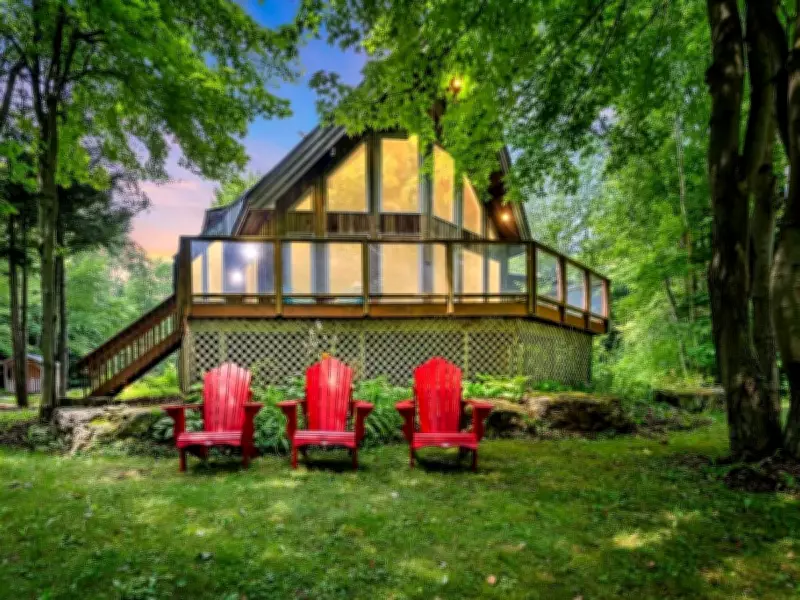
The 10.5-acre property features a renovated five-bedroom century lodge, a semi-off-grid cabin, and a geodesic dome. A restored barn serves as communal gathering space, while hiking trails wind through surrounding forests. Yet Moore identifies the retreat's most remarkable feature as something intangible: the profound quiet.
"There's something about waking up to that quiet, to the smell of the earth after rain, that's incredibly grounding," she observes. "Small details such as snow drifting through an open window in winter have taken on new meaning."
Without leaving her bed, Moore watches sunrises over treetops—a daily spectacle she says she'll never tire of.
Broader Market Implications and Future Outlook
Real estate professionals note that wellness-oriented properties are appearing with increasing frequency on multiple listing services across Canada, presenting unique investment opportunities for buyers seeking both personal sanctuary and entrepreneurial ventures. These listings often emphasize natural surroundings, sustainable features, and potential for holistic hospitality operations.
As global uncertainties persist, the appeal of stable, grounded environments continues to strengthen. The convergence of wellness tourism expansion and rural property adaptation suggests this trend will continue shaping Canada's real estate markets for years to come, creating new economic pathways in countryside communities while offering urban escapees the tranquility they increasingly crave.