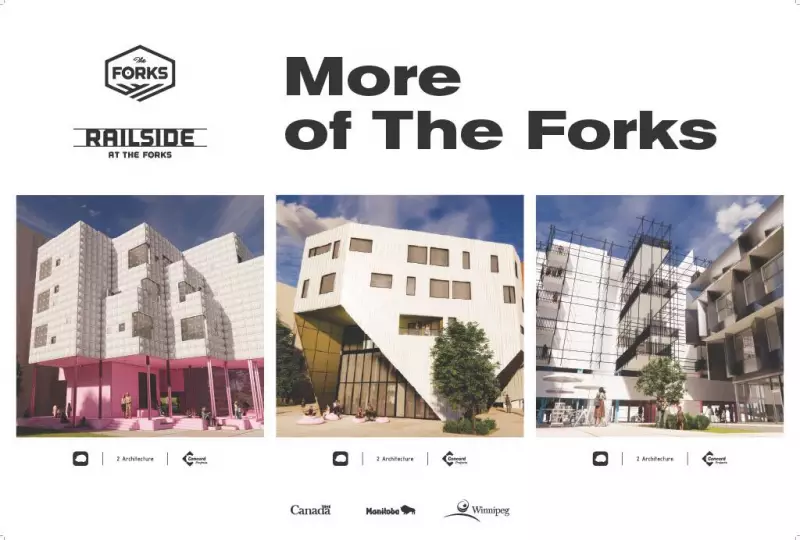
A major redevelopment project in Winnipeg has the potential to serve as a blueprint for other Canadian cities seeking to revitalize their urban cores. The initiative, focused on the historic Forks area, aims to convert a sprawling surface parking lot into a dynamic, mixed-use neighbourhood, signaling a shift towards more sustainable and people-centric city planning.
Transforming a Parking Lot into a Community Hub
The project, announced on January 18, 2026, targets a key parcel of land near Winnipeg's downtown. Currently dominated by asphalt for vehicle storage, the site will be reimagined into a dense, walkable community featuring a blend of residential, commercial, and public spaces. This move aligns with a growing trend in urban design that prioritizes livability and reduces dependence on cars by integrating housing, work, and recreation within a compact area.
By choosing to develop a surface parking lot, the project directly addresses common urban issues such as inefficient land use and the creation of heat islands. The transformation is expected to enhance connectivity in the area and provide a significant boost to the local economy through construction and long-term tenancy.

A Potential National Blueprint for Urban Renewal
Urban planners and municipal leaders across Canada are watching the Winnipeg development closely. The Forks project is positioned not just as a local improvement but as a potential model for other cities grappling with similar challenges. Many municipalities own or control underutilized surface parking lots in prime downtown locations, presenting ripe opportunities for conversion.
This model of infill development—building within existing urban boundaries rather than sprawling outward—is seen as a critical strategy for promoting sustainability, reducing infrastructure costs, and combating urban decay. The success of the Winnipeg endeavour could provide a proven template for how to execute such complex projects, from public consultation and design to financing and construction.
The Future of Sustainable City Building
The implications of this project extend beyond Winnipeg's city limits. As Canadian cities face pressure to increase housing supply, improve public transit access, and meet climate goals, innovative solutions are in high demand. A successful mixed-use neighbourhood at The Forks would demonstrate how to achieve multiple policy objectives simultaneously.
It showcases how strategic redevelopment of existing infrastructure, like parking lots, can create vibrant new communities without requiring annexation of new land. The project underscores a broader movement in city planning where the value of land is measured not by its capacity for cars, but by its potential to foster community, economic activity, and environmental resilience. The eyes of the nation will be on Winnipeg as this ambitious vision takes shape.