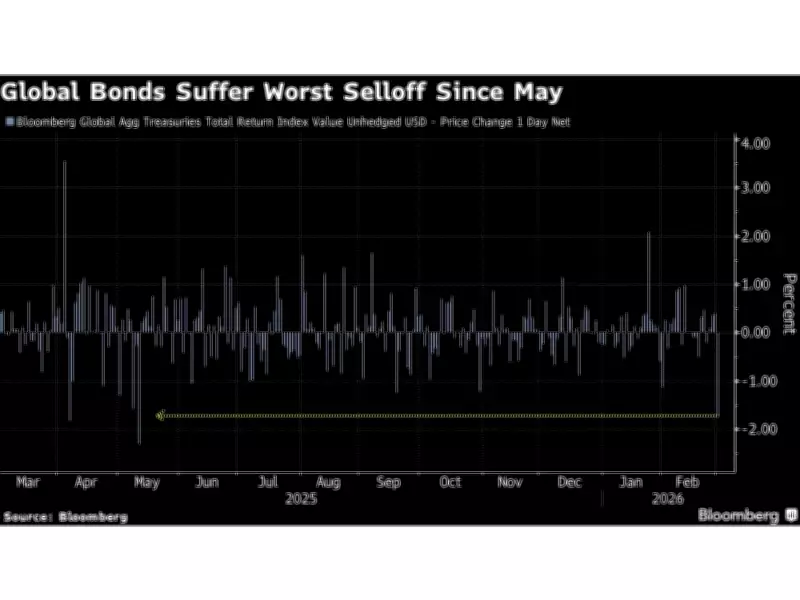
The US-Israeli military engagement with Iran has dramatically reignited inflation anxieties throughout global financial markets, severely undermining the outlook for international bonds that had just experienced their most robust beginning to a year since the pandemic era.
Market Reactions to Geopolitical Tensions
Traders from Sydney to London to New York have been aggressively offloading government debt since Monday as they strategize how a prolonged conflict in the Middle East could potentially escalate oil prices and supercharge inflationary pressures. These mounting concerns are rapidly eroding the traditional safe-haven appeal of fixed-income assets, with sovereign debt instruments across the world posting significant losses throughout this week.
Political Developments and Market Implications
There appear to be few indications of any near-term respite from these market pressures. US President Donald Trump—firmly committed to regime change in Tehran—has publicly vowed to do "whatever it takes," compelling traders to confront the unsettling possibility that the conflict may extend far longer than originally anticipated.

"Contrary to popular wisdom, a shock emanating from the Middle East that puts energy flows at risk generally causes global bond yields to rise, not fall," explained Gareth Berry, a prominent strategist at Macquarie Bank. "That's especially true at a time like this when monetary easing has been priced in ahead of time, which now suddenly looks less likely to materialize."
Central Bank Responses and Policy Shifts
Investors who had been betting on a prolonged period of steady interest rates—or in some cases like the Federal Reserve or Bank of England, anticipating further cuts—are now urgently reassessing their outlook. Central bankers worldwide are already issuing warnings about the potential ramifications for monetary policy.
European Central Bank Chief Economist Philip Lane cautioned that a prolonged war in the Middle East combined with persistent reductions in oil and gas supplies could trigger a "substantial spike" in inflation alongside a sharp decline in economic output, according to reports from the Financial Times. Traders are now pricing in nearly a 50% probability of an ECB interest rate hike this year; remarkably, as recently as Friday, markets had anticipated a 40% chance of a rate cut.
Global Yield Movements and Market Indicators
On the opposite side of the world, Australia's central bank chief Michele Bullock warned that inflation fears might necessitate an interest-rate increase this very month. Australian yields surged as much as 14 basis points on Tuesday in response to these developments.
Japanese government bonds declined on Tuesday, even following firm demand at a sale of 10-year notes, highlighting broader market concerns that current yields do not adequately reflect inflation risks. US 10-year yields increased by six basis points, building upon Monday's 10 basis point surge. A comprehensive Bloomberg gauge of global bonds dropped 0.8% yesterday, representing the most substantial single-day loss since May.
Expert Analysis and Historical Context
A new "stagflationary wind" is blowing through the global economy amid heightened geopolitical risks, observed Mohamed El-Erian, former chief executive officer at Pacific Investment Management Co., in a recent commentary. "With its ultimate impact dictated by the duration and spread of the conflict—the US government bond market has opted for inflation concerns."
Beyond geopolitical shocks, elevated oil prices can "significantly" increase yields, as demonstrated in a Deutsche Bank AG report published last week. The strategists conducted a thorough analysis of the largest geopolitical events spanning several decades, including Iraq's invasion of Kuwait in 1990, the September 11 attacks in the United States, and Russia's invasion of Ukraine.