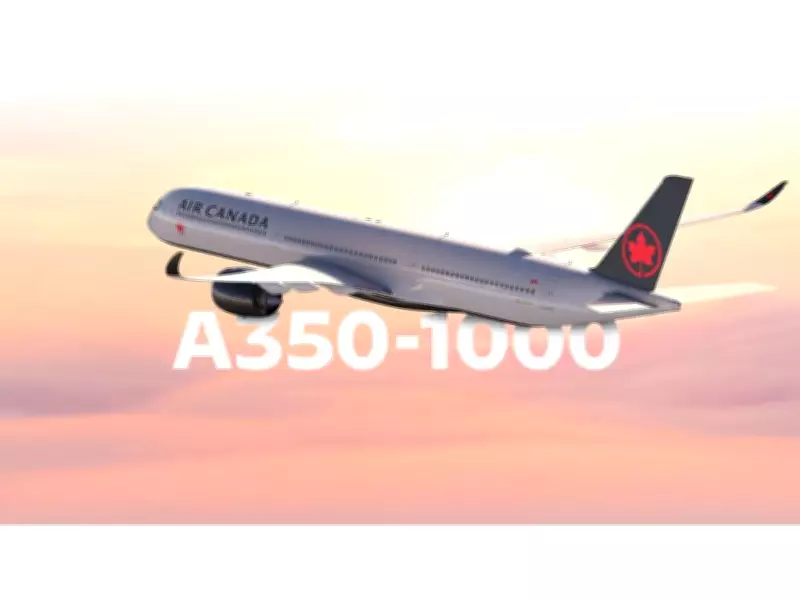
Air Canada has unveiled a significant fleet expansion plan with the acquisition of state-of-the-art Airbus A350-1000 widebody aircraft, marking a new chapter in its long-haul operations. The airline confirmed an order for eight aircraft, with rights to purchase an additional eight, positioning itself for substantial international network growth.
Strategic Fleet Modernization
Based in Montréal, Air Canada announced this strategic move on February 11, 2026, as part of its ongoing fleet modernization program. The first deliveries of the Airbus A350-1000 are scheduled to begin in the second half of 2030, introducing advanced capabilities to the airline's international routes.
Executive Perspectives on the Acquisition
Mark Galardo, Executive Vice President and Chief Commercial Officer, and President of Cargo at Air Canada, emphasized the transformative impact of this acquisition. "Air Canada's acquisition of the Airbus A350-1000 will further solidify our position as a leading global airline through the next decade," he stated. "This state-of-the-art aircraft adds a new dimension to Air Canada's long-haul capabilities, with impressive range, enhanced payload, and proven economics that unlock new possibilities for long-haul flying for our customers."

Galardo highlighted that these highly capable aircraft will provide flexibility in supporting a growing, resilient, and diversified future network, playing a central role in defining Air Canada's next era of global connectivity.
John Di Bert, Executive Vice President & Chief Financial Officer at Air Canada, framed the acquisition as a forward-looking investment. "The addition of the Airbus A350-1000 to our fleet is a forward-looking investment that strengthens Air Canada's long-term cost efficiency," he explained. "These aircraft will deliver improved operating economics, enhance our operational reliability, and ensure we remain competitive across our global network."
Technological and Environmental Advantages
The Airbus A350-1000 is powered by the XWB97 engine from Rolls Royce and fabricated using lighter weight materials. According to Airbus estimates, this advanced design delivers up to a 25 percent reduction in fuel consumption compared to previous generation aircraft. With a potential range of approximately 9,000 nautical miles, the aircraft offers exceptional long-haul performance.
Di Bert noted that the aircraft's lighter materials and advanced engines contribute to meaningful fuel-burn improvements, supporting both financial and environmental objectives. This order aligns with Air Canada's capital allocation priorities and its target to maintain capital investments at or below 12 percent of revenues.
Enhanced Passenger Experience
Airbus reports that passengers will experience the quietest twin-aisle cabin available, designed with pressurization limited to 6,000 feet to reduce stress on the body, minimize jet lag, and deliver a noticeably more comfortable travel experience. The A350-1000 will be equipped with the latest generation in-flight entertainment screens and connectivity, along with Air Canada's new cabin standard, which is being introduced later this year.
Comprehensive Fleet Expansion
This order for eight A350-1000s complements Air Canada's broader fleet modernization efforts:
- Fourteen Boeing 787-10 Dreamliners are expected to start entering service later this year
- The first of thirty Airbus A321XLRs will arrive in the coming months
- Air Canada continues to take deliveries of the Canadian-assembled Airbus A220, with 23 aircraft remaining on its firm order of 65
- An additional five Boeing 737 MAX aircraft, on lease, are expected to enter service in 2026
This comprehensive approach to fleet renewal positions Air Canada for enhanced operational efficiency, improved customer experience, and strengthened competitiveness in the global aviation market.