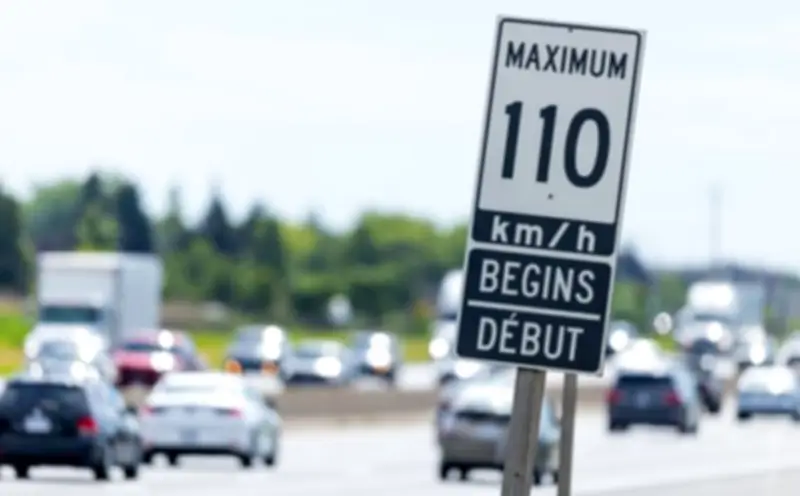
Ontario Expands 110 km/h Speed Limit to Nearly 90% of Highway Network
Ontario is raising the speed limit on an additional 938 kilometres of provincial highways, bringing the total to nearly 89% of the province's highway network. The increase from 100 km/h to 110 km/h will take effect incrementally starting Friday, June 26, 2026, and continuing until September 30, 2026.
Transportation Minister Prabmeet Sarkaria announced the expansion at a press conference in King City, Ontario, on Wednesday, June 24, 2026. The move builds on previous increases in 2022 and 2024, which the government says were safe and successful.
Highways Affected and Timeline
Starting June 26, speed limits will be raised on sections of Highways 401 and 416 in Eastern Ontario. Subsequent increases will apply to sections of the Queen Elizabeth Way (QEW) and Highways 400, 401, 402, 403, 416, and 417. The province has not released a specific schedule for each segment but stated that all changes will be complete by September 30.

Currently, 873 kilometres of provincial highways are posted at 110 km/h. Once the new sections are added, nearly 89% of Ontario's highway network will have a posted speed limit of 110 km/h, according to the Ministry of Transportation.
Safety and Engineering Considerations
Speed limit increases are only implemented on highways designed and engineered to safely accommodate higher speeds, following rigorous technical reviews and necessary infrastructure improvements. Most of Ontario's freeway network was originally designed for 110 km/h, the government noted.
Stunt driving penalties will continue to apply at 150 km/h on all highways. On sections with increased speed limits, stunt driving penalties will apply at 40 km/h over the posted limit, meaning 150 km/h in a 110 km/h zone.
Local and Provincial Support
King City Mayor Steve Pellegrini welcomed the announcement, saying, “King welcomes the province’s continued investment in improving transportation efficiency across Ontario. Expanding the 110 km/h speed limit to additional highway sections will help people and goods move more efficiently.” He added, “As communities like King continue to grow, initiatives like this help reduce travel times, strengthen economic connections, and support a modern transportation network that meets the needs of residents, businesses, and visitors alike.”
King-Vaughn MPP Stephen Lecce also expressed support: “Our government is building new subways, highways, and GO transit to get Ontarians moving faster. This new policy builds on our actions to reduce congestion on our roads and save families time, all while maintaining safety on and off the road.”
Historical Context and Previous Increases
This is not the first time Ontario has raised speed limits. In April 2024, the province increased limits on 10 additional highway sections to 110 km/h. On July 12, 2024, the speed limit was raised on five sections of Highway 401, two sections of Highway 403, and one section each of Highways 406 and 416, followed by a 69-kilometre stretch of Highway 69 between Sudbury and French River.
In September 2019, the province launched three speed limit pilot programs on sections of Highways 402, 417, and the QEW to explore ways to improve traffic flow. Until 1975, Highways 400, 401, 417, and the QEW were posted at 113 km/h before being reduced due to the energy crisis.
Expected Benefits
The government cites decreased travel times and improved efficiency as key benefits. The Ministry of Transportation estimates that the higher speed limits will reduce travel times on affected routes, supporting economic connections and reducing congestion.