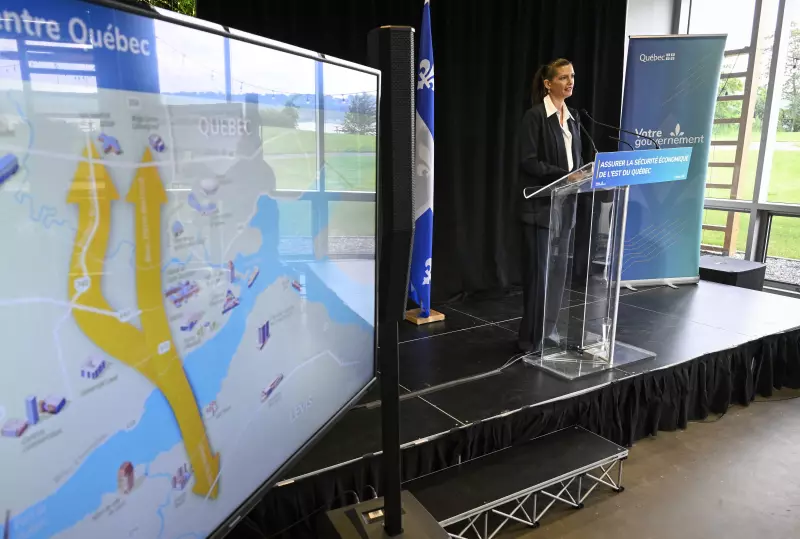
Quebec's provincial government is once again examining the feasibility of the controversial Third Link project, a proposed transportation corridor intended to connect Quebec City with its South Shore. Transport Minister Geneviève Guilbault addressed the ongoing discussions on June 12, 2025, signaling a renewed, though cautious, interest in the massive infrastructure undertaking.
Minister Guilbault's Cautious Stance
During her announcement, Minister Guilbault did not commit to a firm timeline or a definitive green light for the project. Instead, she framed the government's position as one of re-evaluation, acknowledging the persistent public and political debate surrounding the need for a third fixed link across the St. Lawrence River. The minister's comments suggest the Coalition Avenir Québec (CAQ) government is carefully weighing the project's significant costs, estimated in the billions, against its potential to alleviate chronic traffic congestion in the capital region.
A Long and Contested History
The Third Link, often envisioned as a tunnel, has been a recurring theme in Quebec politics for decades. Proponents argue it is essential for economic development, improved mobility, and redundancy for the existing Pierre Laporte and Quebec bridges. Opponents, including many urban planners and environmental groups, question its necessity in an era of promoting public transit and fear it will induce more demand for car travel and increase urban sprawl. The project was a key promise during the 2022 provincial election campaign but was later paused for further study.

What Happens Next?
The minister's latest remarks keep the project in the public discourse without making a binding commitment. The next steps will likely involve updated feasibility studies, new cost analyses, and extensive public consultations. Any movement toward construction would require a detailed environmental assessment and a complex financing agreement involving the provincial and federal governments. For now, the Third Link remains in a state of political limbo, with the Quebec government keeping the possibility alive while navigating the substantial logistical and fiscal challenges it presents.
The outcome of this renewed consideration will have major implications for the future of transportation and urban development in Quebec City and the Chaudière-Appalaches region. Residents and stakeholders are advised to follow official announcements from the Ministry of Transport for concrete developments.