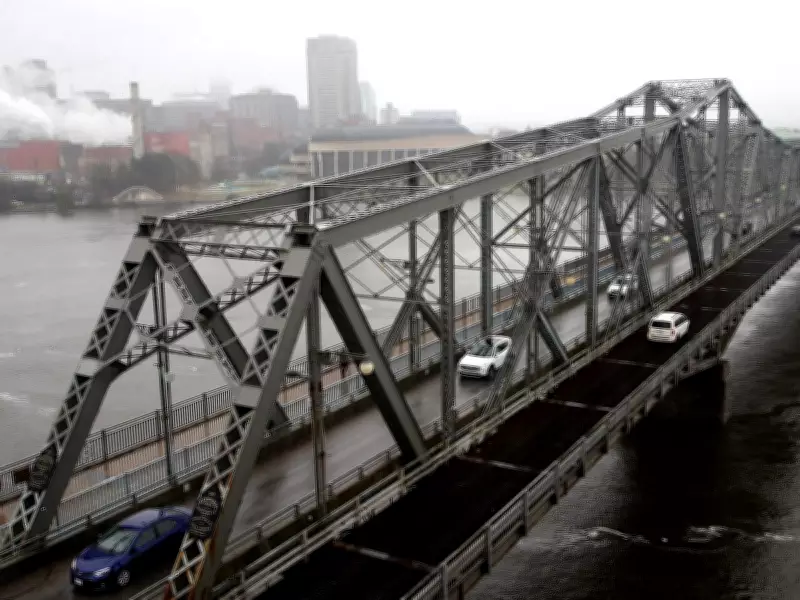
Federal Study Explores Tram Return to Alexandra Bridge Replacement
The federal government is actively researching the potential to restore tram service across the Ottawa River by designing the replacement for the historic Alexandra Bridge to accommodate light rail transit in the future. An internal consultant report, obtained through an access-to-information request, details the technical considerations for ensuring the new structure can one day support trams, a mode of transport that originally crossed the bridge when it opened in 1901.
Future-Proofing the Bridge Design
Under the oversight of Public Services and Procurement Canada (PSPC) and the National Capital Commission (NCC), the Alexandra Bridge replacement project has been underway since 2019. From its inception, a key commitment has been to future-proof the design for possible conversion to include a tramway alongside the roadway. The Tramway Conversion Guidelines report, dated May 27, 2025, assesses the implications to ensure the bridge design does not present insurmountable challenges for future tram operations.
The report states, "A project commitment for the Alexandra Bridge Replacement is that it will be futureproofed for conversion of the proposed roadway to combined roadway with a tramway at a later stage." This involves accounting for the space and structural loading requirements of rail systems to safely accommodate transit vehicles.

Technical Details and Options
While largely technical, the report offers insights into how a resurrected tram system might function on the crossing between Ottawa and Gatineau. Key details include:
- The system could be designed for single cars capable of transporting up to 7,500 people per hour in one direction, with trams running every two and a half minutes.
- Several power options are considered, including overhead wires similar to Ottawa's current light rail system or alternative methods like power from below.
- If overhead wires are used, the report recommends heating them to prevent ice build-up, addressing a known issue that has plagued Ottawa's Line 1 during winter months.
- To avoid the visual impact of overhead systems in the downtown core, the report suggests equipping trams with onboard batteries to power them through specific segments of the route.
Historical Context and Symbolism
The Alexandra Bridge, which opened in 1901 as the longest cantilevered span in Canada, originally carried a mix of traffic, including horse-drawn buggies and electric trams. More than a century later, after the tracks were removed, the government is studying how to reintegrate this transit link. This effort aligns with broader goals of enhancing public transit and reconnecting the symbolic crossing between the two cities.
Although ministerial briefings and project updates have previously mentioned trams in passing, this report provides a deeper look into the behind-the-scenes work to incorporate future transit needs into the bridge plans. As the replacement project progresses, ensuring the design supports mass public transit remains a focal point, blending historical significance with modern infrastructure demands.