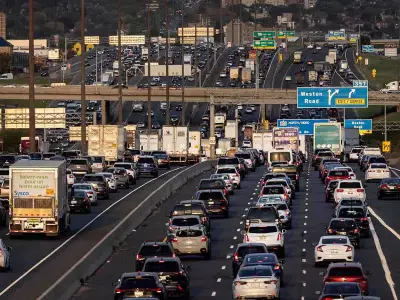
Toronto's newly appointed Chief Congestion Officer, Andrew Posluns, has outlined his initial strategy to combat the city's notorious gridlock, just days into his pioneering role. The city's first-ever traffic czar emphasized a period of consultation before unveiling concrete plans, identifying major construction projects and the upcoming FIFA World Cup as immediate focal points.
Consultation First, Action to Follow
In his first week at City Hall, Andrew Posluns stated his approach is to first "get the lay of the land" through extensive meetings with city officials and stakeholders. His formal title is Chief Congestion Officer, a position created to directly address the transportation paralysis that has become synonymous with Canada's largest city. Posluns confirmed his short-term focus will be on providing input for the city's Congestion Management Plan, scheduled for review by the infrastructure and environment committee in April.
Pinpointing the Primary Culprits of Gridlock
Posluns was unequivocal about the main drivers of Toronto's traffic woes. "Construction is one of the largest if not the largest driver of congestion in the past in the city of Toronto," he stated, acknowledging the local adage that Toronto has only two seasons: winter and construction. His second major concern is planning for large-scale events, most pressingly the FIFA World Cup matches coming to the city in the summer of 2026.

The economic impact of this congestion is staggering. A recent estimate suggests traffic gridlock costs the economy of the Greater Toronto and Hamilton Area approximately $10 billion annually in lost productivity and additional expenses.
Learning from Past Events and Global Cities
Drawing on his 25 years of experience with organizations like Metrolinx, the Canada Infrastructure Bank, and the Ontario Ministry of Transportation, Posluns referenced strategies from past events like the Pan Am Games. During those games, high-occupancy vehicle (HOV) lanes were successfully used to ensure athletes and officials reached venues on time, while also being opened to public carpools.
He also indicated a willingness to study solutions implemented in other major global cities facing similar challenges. This includes New York City's reconfiguration of traffic flow in areas like Times Square and London's controversial congestion charge for drivers entering the city centre. "We should be looking at examples of what other cities are doing," Posluns said, while cautioning that he wouldn't yet speculate on which specific measures might be adopted for Toronto.
The urgency of his role has been highlighted by several high-profile incidents where gridlock forced celebrities and athletes to abandon their vehicles. Members of the pop group One Direction and NHL players from visiting teams have reportedly gotten out and walked to downtown venues to avoid being late. Posluns acknowledged that mitigating such disruptions during major events is a key part of his mandate.
When pressed on specific, potentially contentious solutions—such as implementing a toll for drivers from outside Toronto entering the city or easing congestion around the perpetually problematic Gardiner Expressway—the new traffic czar declined to offer an opinion, reiterating his current consultative phase. The proof of his effectiveness, he implied, will be measured by one simple metric: when and if Toronto traffic starts moving again.