TransLink Announces Comprehensive Transit Strategy for 2026 World Cup Events
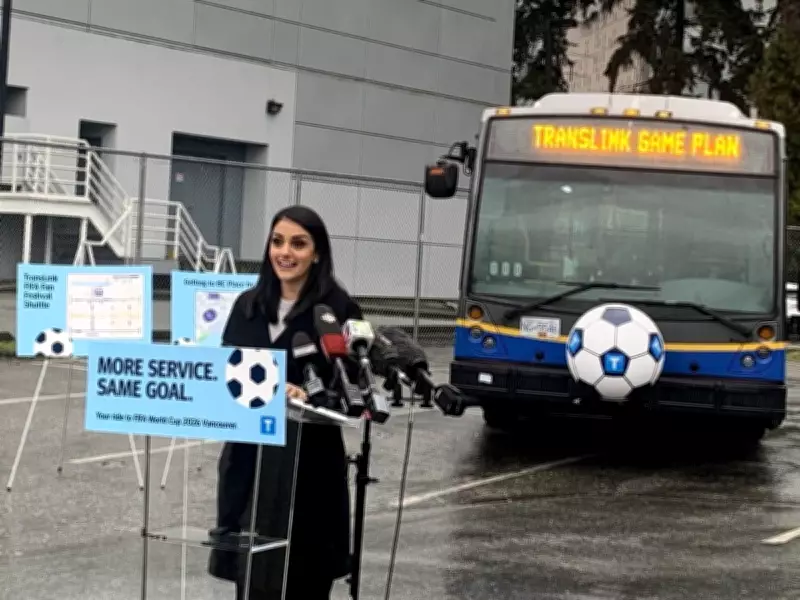
TransLink has revealed detailed plans for managing transportation during the 2026 FIFA World Cup matches scheduled for June and July in Vancouver. The transit authority's spokesperson, Anita Bathe, announced significant changes that will affect how thousands of spectators access B.C. Place stadium during the international sporting event.
Major Changes to Stadium Access Points
During World Cup game days, pedestrian access to B.C. Place stadium will be completely closed from two key SkyTrain stations. Spectators will not be able to enter the stadium directly from the Expo Line's Stadium-Chinatown station or the Canada Line's Yaletown-Roundhouse station. This represents a substantial departure from normal access patterns for local residents accustomed to using these stations for stadium events.
Instead, all transit-arriving spectators will be directed to use the Expo Line's Main Street-Science World station. From this designated point, fans will follow a specially marked "last-mile pedestrian area" stretching from Quebec Street to Pacific Boulevard, leading them to a single controlled entrance at the stadium.

"This will be different for locals who are used to accessing B.C. Place stadium from Stadium SkyTrain station," explained Bathe. "Pedestrian and street access to B.C. Place will be closed on match days to manage the expected large crowds safely."
Expanded Transit Services Across Metro Vancouver
TransLink is implementing a comprehensive service expansion to accommodate the hundreds of thousands of fans expected to travel throughout Metro Vancouver during the four-week tournament. With exactly 100 days remaining until the event begins, the transit authority outlined several key enhancements:
- Approximately 600 additional bus trips daily across the system
- Increased frequency on the SeaBus between Vancouver and the North Shore, with departures every 10 minutes instead of the usual 15 minutes
- Extended SkyTrain operating hours for matches with 9 p.m. kickoffs, with final trains running until 2:15 a.m.
- Strategic positioning of empty trains at Main Street-Science World station to handle post-match crowds efficiently
- Enhanced service throughout downtown Vancouver and to the FIFA Fan Festival location near the PNE
Specialized Shuttle Services and Traffic Management
The additional bus trips will include dedicated routes serving the FIFA Fan Festival Vancouver area at the PNE, with shuttle connections between the festival site, Expo Line, and Millennium Line stations. TransLink will also deploy additional buses on standby to respond to unexpected crowd surges or changing conditions during the tournament.
"There will be dispatchers working around the clock to make sure that if anything needs to change in our plan, we can react as quickly as possible," Bathe emphasized.
TransLink officials stress that public transit will be the fastest and most efficient way to reach both B.C. Place and the FIFA Fan Festival during the World Cup. Temporary road closures, controlled access areas, and comprehensive traffic management measures will be implemented near these venues on match days to ensure safety and smooth operations.
Funding and Operational Details
The World Cup transit initiative carries a budget of $21.6 million, covering increased service levels, improved wayfinding systems, and additional on-the-ground staffing. According to Bathe, this funding comes through the City of Vancouver Host Committee's financial framework, accounting for any incremental ridership revenue generated during the tournament period.
Despite the access restrictions for stadium-bound spectators, Bathe clarified that residents who live and work in the Stadium-Chinatown station area will still be able to use the station's upper-level entry and exit gates during the World Cup period.
The transit authority's preparations reflect the scale of what will be one of the largest sporting events ever hosted in Vancouver, requiring coordinated transportation planning to move massive crowds efficiently while maintaining safety standards for both visitors and local residents.