The art world is abuzz with a seismic revelation: the elusive street artist Banksy has reportedly been unmasked. This development raises profound questions about the intrinsic value of anonymity in contemporary artistic practice and its influence on cultural perception.
The Enigma of Banksy: A Deliberate Veil
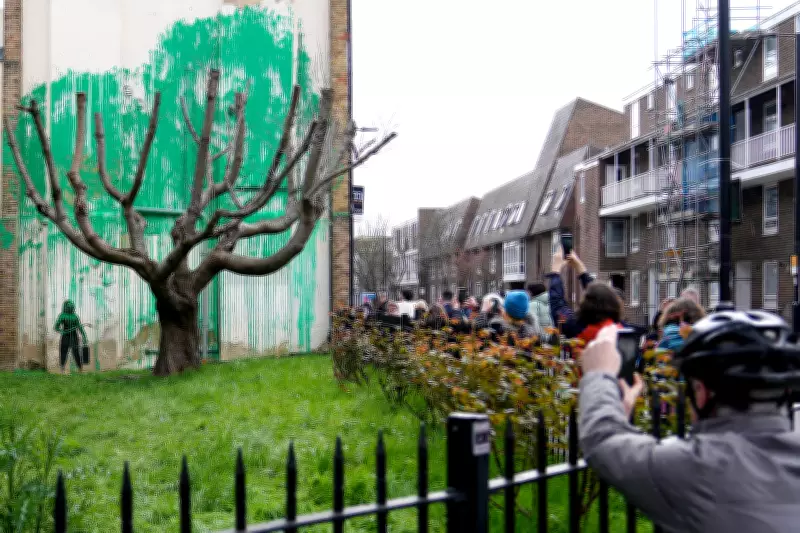
For decades, Banksy has cultivated an aura of mystery, with their identity shrouded in secrecy. This anonymity has been a cornerstone of their artistic brand, allowing the work itself to take center stage while fueling public fascination. The artist's politically charged and often subversive pieces, appearing unexpectedly on urban walls worldwide, have gained immense value—both culturally and financially—partly due to this enigmatic persona.
Anonymity as Artistic Currency
In today's hyper-connected society, where personal branding is often paramount, Banksy's choice to remain anonymous stands as a radical act. Art experts argue that this secrecy amplifies the impact of their messages, divorcing the art from the artist's personal narrative. It challenges traditional art market dynamics, where an artist's biography frequently dictates pricing and prestige.

The potential unmasking threatens to disrupt this delicate balance. Collectors and institutions have invested heavily in Banksy's works, with pieces fetching millions at auction. The revelation could alter market perceptions, though some analysts suggest the artist's established legacy may withstand the exposure.
Broader Implications for Artistic Expression
This situation prompts a wider reflection on anonymity's role in creative fields. From literary pseudonyms to digital avatars, concealing identity can empower artists to explore controversial themes without personal repercussion. It also democratizes art appreciation, focusing critique on the work rather than the creator's background.
However, the erosion of Banksy's anonymity highlights a tension between public curiosity and artistic integrity. As surveillance technologies and digital tracing advance, maintaining such secrecy becomes increasingly challenging, potentially endangering a tool that has historically protected marginalized or dissident voices.
The Future of Anonymous Art
Regardless of the verification of Banksy's identity, this episode underscores a critical debate: does knowing the artist enhance or diminish the art's power? For some, anonymity is a gimmick; for others, it is a vital component of artistic freedom. The art world now watches closely to see how this revelation might reshape not only Banksy's legacy but also the valuation of anonymity itself in an era of relentless exposure.
Ultimately, the unmasking serves as a poignant reminder that in art, as in life, mystery often holds immense value—a principle that may persist even when the veil is lifted.