The Unmasking of Banksy: From Ukraine Murals to Legal Name Change
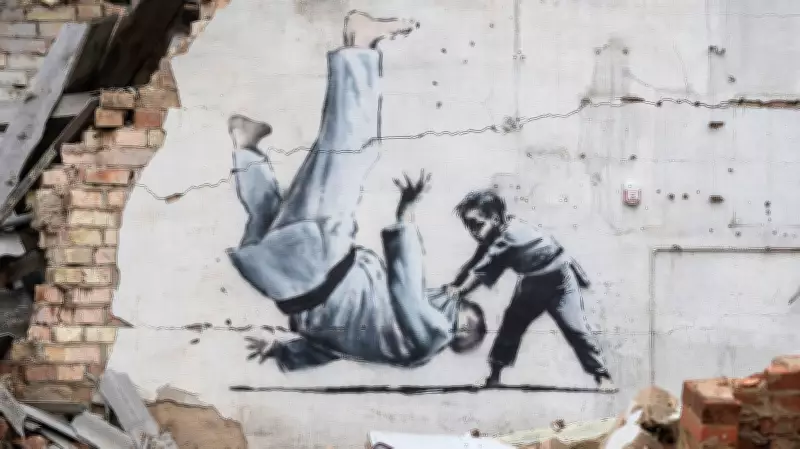
In late 2022, an ambulance arrived at a bombed-out apartment building in Horenka, a village near Kyiv, Ukraine. Three individuals emerged from the vehicle. Two wore masks and hoodies, while the third was unmasked and had one arm with two prosthetic legs, according to witness accounts provided to Reuters. The masked men carried cardboard stencils and spray paint, quickly creating an absurd image on the ruined interior wall: a bearded man scrubbing his back in a bathtub amid the wreckage.
This was the work of Banksy, the world's most enigmatic street artist whose identity has been fiercely guarded for decades. Known for stencil paintings with sharp social commentary, Banksy has transformed from a perceived vandal to a British national treasure, with his "Girl with Balloon" voted Britain's favorite artwork in one poll. His anonymity has been central to his mystique, with critics arguing it's as crucial to his work as the paint itself.
The Ukraine Investigation
When Banksy's Ukraine murals appeared, Reuters launched an investigation to determine how the artist pulled off the stunt and uncover his true identity. Horenka was less than five miles from Bucha, where Russian forces had left at least 300 civilians dead seven months earlier. Reporters visited the village with a photo lineup of rumored Banksy candidates, showing images to locals including resident Tetiana Reznychenko, who had made coffee for the painters.

While Reznychenko denied recognizing anyone, her reaction to one photo proved telling. The image was of Robert Del Naja, frontman of trip-hop band Massive Attack and a graffiti pioneer known as 3D. This aligned with other discoveries: immigration sources confirmed Del Naja entered Ukraine on October 28, 2022, shortly before the murals appeared, accompanied by documentary photographer Giles Duley, who lost limbs in Afghanistan and whose Legacy of War Foundation provided the ambulance Banksy used.
The New York Arrest Revelation
The investigation uncovered previously unreported police documents and court records from September 2000, when Banksy was arrested in New York for defacing a Marc Jacobs billboard at 675 Hudson Street. The handwritten confession and court documents repeatedly name Robin Gunningham as the perpetrator. This confirmed The Mail on Sunday's 2008 investigation that identified Gunningham as Banksy, though the artist's team had denied it at the time.
Gunningham, born in 1973 and educated at Bristol Cathedral School, showed early artistic talent and theatrical flair. School records reveal he created comic strips at age 11, won art awards, demonstrated stage presence in plays, and made "spectacular saves" as a field hockey goalkeeper. These traits would later define the Banksy persona.
The Name Change and Painting Partner
Despite confirming Gunningham's identity, a puzzle remained: immigration records showed no evidence of Gunningham entering Ukraine. Former manager Steve Lazarides provided the crucial explanation, revealing that in 2008, he arranged a legal name change for his client. "There is no Robin Gunningham," Lazarides told Reuters. "The name you've got I killed years ago."
Through corporate filings and property records, Reuters identified the new name as David Jones—one of Britain's most common names, shared by musician David Bowie. Immigration sources confirmed a "David Jones" with Gunningham's birthdate entered Ukraine on October 28, 2022, at the same location and time as Del Naja and Duley, departing on November 2 alongside Del Naja.
This explains the two painters in Horenka: Robert Del Naja and David Jones (formerly Robin Gunningham). Del Naja's connection to Banksy runs deep—both were inspired by anarchist punk band Crass, and Banksy once acknowledged copying "3D from Massive Attack" rather than French stencil artist Blek le Rat.
The Business Empire and Charitable Work
Behind the anonymity lies a sophisticated business operation. Banksy's Pest Control Office, incorporated in 2008, serves as authentication body and business hub, with parent company Picturesonwalls Limited. Financial filings show substantial growth: Pest Control's assets grew from £243,019 in 2009 to approximately £5.7 million in 2024, including £4.4 million in cash.

Secondary market sales of Banksy works have generated nearly $250 million since 2015, though the artist receives only small royalties. However, Banksy now conducts private sales for VIP collectors, with one February 2024 secret exhibition in Shoreditch featuring works priced up to £500,000. Buyers sign three-year non-resale and nondisclosure agreements.
Despite commercial success, Banksy has maintained charitable commitments. His donations include: £24,406 to Sightsavers from 2008 print sales; over £400,000 to save Bristol's Broad Plain Boys Club in 2014; materials from his "Dismaland" theme park to Calais migrant camps in 2015; a £16.8 million NHS tribute piece in 2020; funding for the MV Louise Michel migrant rescue ship; and £250,000 for Ukraine aid through the Legacy of War Foundation in 2022.
Legal Controversies and Special Treatment
Banksy's relationship with authorities has evolved. While anonymity began as "a way to evade law authorities" in Bristol according to Lazarides, the artist now appears to receive special treatment. His September 2025 mural on London's Royal Courts of Justice—depicting a judge bashing a protester—resulted in a £23,690 cleanup bill but no apparent penalty, despite graffiti being illegal.
Street artist David Speed articulated the double standard: "When street artists do it, it's vandalism. When Banksy does it, it's an art piece." Art investment site MyArtBroker noted such public interventions "maintain visibility and authorship—qualities that keep collector confidence high and demand active," indirectly boosting market value.
The Artist's Response
When presented with Reuters' findings, Banksy didn't reply. His company, Pest Control, said the artist "has decided to say nothing." His longtime lawyer, Mark Stephens, wrote that Banksy "does not accept that many of the details contained within your enquiry are correct" without elaboration. Stephens urged against publication, arguing anonymity protects freedom of expression and that Banksy has faced "fixated, threatening and extremist behaviour."
Reuters considered these concerns but concluded the public has a legitimate interest in understanding a figure with such profound cultural influence. The investigation reveals Banksy as Robin Gunningham-turned-David Jones, working occasionally with Robert Del Naja, operating a multimillion-dollar business while maintaining charitable giving—all behind a carefully constructed veil of anonymity that has become his most valuable asset.