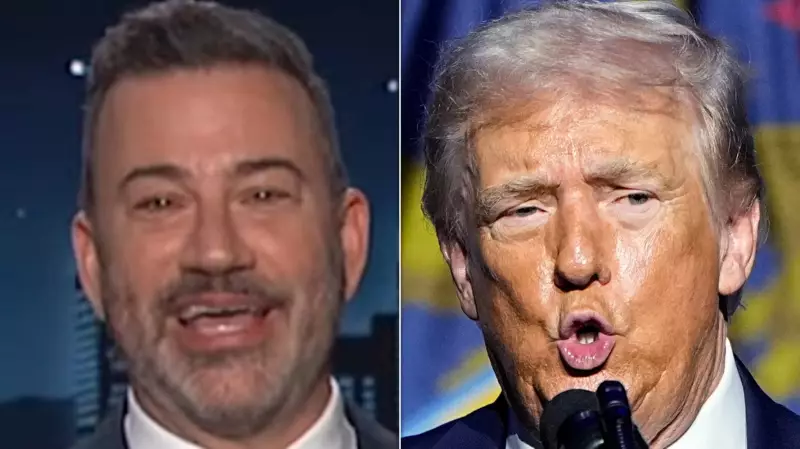
Late-night television host Jimmy Kimmel has publicly voiced his confusion over the steadfast support for former President Donald Trump, even as his political and legal challenges mount. During his monologue on Tuesday night, Kimmel highlighted a stark contrast in public opinion that continues to define the American political landscape.
A Head-Scratching Disconnect in Public Opinion
Kimmel pointed directly to recent polling data, noting that Donald Trump holds a 54% disapproval rating. Despite this significant negative sentiment, the host observed that approximately 40% of Americans continue to support the former president. This enduring base of loyalty, often referred to as the MAGA faithful, persists through numerous controversies and an administration Kimmel described as spiraling.
The comedian drew a historical parallel to emphasize his point, suggesting Trump could be the most unpopular president since Richard M. Nixon. Nixon infamously resigned from office in 1974 during the Watergate scandal, a moment of profound political crisis. Kimmel implied that Trump's current standing with the public evokes a similar level of widespread discontent.

Kimmel's Theory on Maintaining MAGA Positivity
Kimmel admitted he finds this lingering support "hard to understand" given the circumstances. However, ever the entertainer, he claimed to have identified a method that allows Trump's supporters to remain optimistic and positive in their view. While the specifics of his humorous theory were not detailed in the initial report, the segment likely offered a satirical take on the cognitive dissonance often discussed in political analysis.
The monologue taps into a broader national and international conversation about political polarization. For Canadian audiences, understanding these dynamics is crucial, as the political climate in the United States invariably influences cross-border relations, economic policy, and global affairs. Kimmel's commentary, while delivered through comedy, underscores a deep and persistent divide in American society.
The Lasting Impact of Political Polarization
The discussion initiated by Kimmel goes beyond a simple joke. It reflects on the nature of modern political allegiance, where support can become entrenched and seemingly immune to external events or declining approval ratings. This phenomenon is not exclusive to the United States but serves as a case study observed worldwide, including by political analysts in Canada.
By framing his puzzlement around concrete numbers—the 54% disapproval versus the 40% approval—Kimmel grounded his comedy in a factual reality that is the subject of daily debate. His role as a late-night host allows him to distill complex political realities into digestible and often provocative commentary, reaching millions of viewers who consume news through entertainment.
Ultimately, Jimmy Kimmel's segment is more than just a nightly monologue; it is a reflection of the ongoing struggle to comprehend the forces that shape contemporary political loyalty. As the next election cycle approaches, the resilience of Trump's base will remain a central focus for commentators, comedians, and citizens on both sides of the 49th parallel.