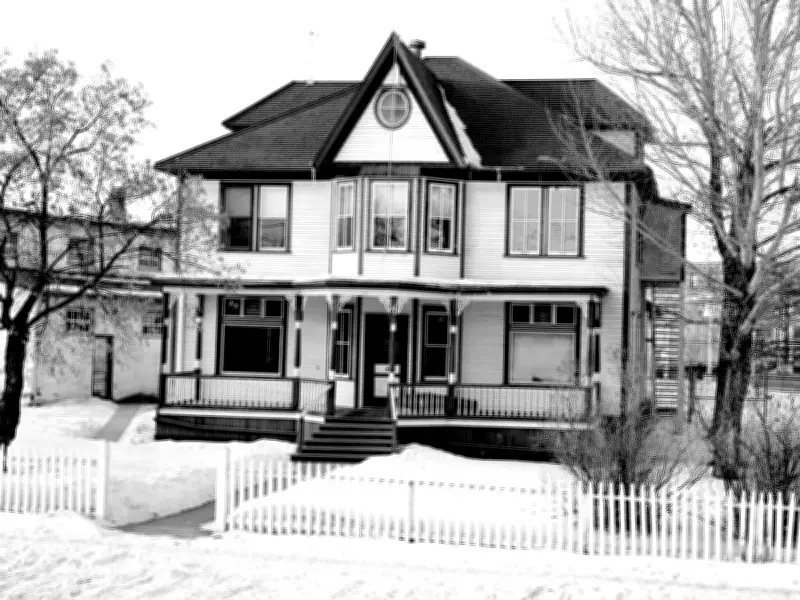
Historic James Clinkskill House in Saskatoon Slated for Demolition in 1960
On February 26, 1960, the Saskatoon StarPhoenix delved into the rich history of the old James Clinkskill house as plans were finalized for its imminent removal. The building, a familiar sight on the river bank near the Nineteenth Street bridge, had been sold for demolition, signaling the end of a significant chapter in the city's architectural legacy.
A Home Turned Military Hub
For many years, the federal government owned the property, utilizing it as an officers' mess hall in conjunction with the adjacent armories. This transformation occurred during the First World War when James Clinkskill, a pioneer merchant, sold the house to support the war effort. Originally constructed between 1901 and 1903, it was once considered one of the finest homes in Saskatoon, reflecting the city's early growth and prosperity.
Memories from the Clinkskill Family
Mrs. W.W. Ashley, the eldest daughter of James Clinkskill, shared poignant recollections of the family home. She noted that from the outside, the house looked exactly as it did nearly six decades earlier when her father moved in with his wife and their eight children—seven daughters and one son. The Clinkskill family had previously lived above their general store, which James opened in Saskatoon in 1899 after relocating from Battleford.

Mrs. Ashley vividly remembered sitting on the verandah as a child, watching the construction of the Nineteenth Street bridge. She also recounted her wedding in 1910, which took place at the nearby Knox Church, followed by a joyful run back home instead of waiting for their cab driver. The house was a hub for social gatherings, with dances for up to 60 young people, often accompanied by the old Jackson orchestra.
Architectural Details and Later Years
The house featured a spacious layout, including a living room, dining room, breakfast room, bedroom, and kitchen on the first floor. Upstairs, there were five bedrooms and a bathroom, with an unfinished attic. James Clinkskill's study, located in a room with a bay window on the second floor, offered a fine view of the river, a testament to the property's prime location.
After selling the house, Clinkskill moved to a brick home down the street, which later became part of Riverview Apartments on Spadina Crescent. He eventually relocated farther up the crescent near the dam, remaining close to the river he cherished. The Clinkskill house, with its fast-growing maples planted by James himself, stood as a silent witness to Saskatoon's evolution until its planned demolition in 1960.
This article, based on archives from the City of Saskatoon, highlights the bittersweet transition from a cherished family residence to a government facility, and finally to a site marked for removal, underscoring the fleeting nature of historic landmarks in urban development.