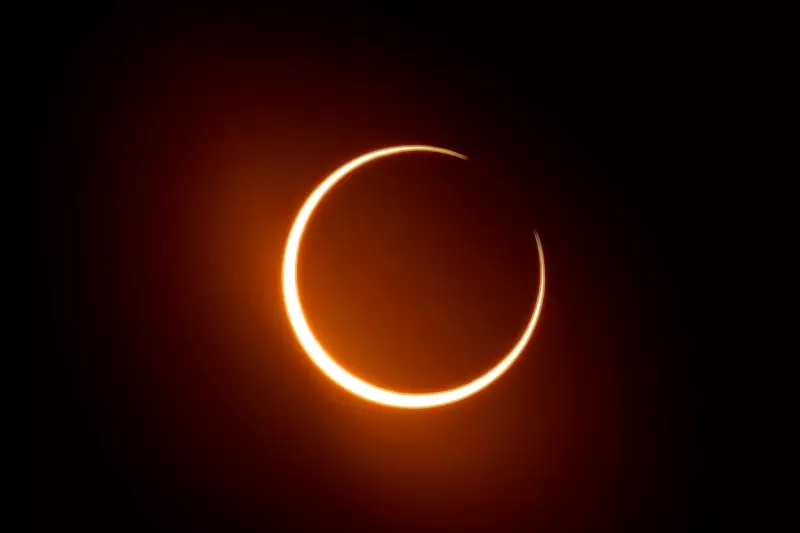
A breathtaking celestial event is set to illuminate the skies over Antarctica in 2026, as a rare annular solar eclipse will create a stunning "ring of fire" effect. This astronomical phenomenon will be visible across the frozen continent, captivating both human observers and the region's iconic penguin populations.
A Spectacular Display in the Southernmost Continent
The eclipse, scheduled for February 13, 2026, will occur when the moon passes directly in front of the sun but doesn't completely cover it, leaving a brilliant ring of sunlight visible around the moon's silhouette. This creates the dramatic "ring of fire" appearance that gives annular eclipses their distinctive name.
Unique Viewing Conditions in Antarctica
Antarctica's remote location and pristine atmospheric conditions make it an exceptional viewing site for astronomical events. The continent's minimal light pollution and clear skies during the southern hemisphere summer provide optimal visibility for this rare eclipse.

The event will be particularly notable for occurring during a period when Antarctica experiences nearly continuous daylight, adding to the surreal quality of the eclipse. Scientific teams stationed at research bases across the continent are preparing observation plans to document the phenomenon from multiple locations.
Impact on Antarctic Wildlife
While human observers will appreciate the eclipse's scientific and aesthetic value, researchers are particularly interested in how Antarctica's wildlife will respond to the sudden dimming of daylight. Penguins, seals, and other animals that rely on visual cues for their daily activities may exhibit interesting behavioral changes during the brief period of reduced sunlight.
Previous solar eclipses in polar regions have shown temporary alterations in animal behavior, with some species interpreting the event as an unusually early dusk. Scientists plan to monitor penguin colonies specifically to document any reactions to the changing light conditions.
Scientific Significance of the Event
This Antarctic eclipse offers valuable research opportunities for astronomers and atmospheric scientists. Observations from Antarctica's unique vantage point can provide data that complements studies conducted during eclipses in other parts of the world.
The event follows a similar annular eclipse that was visible from North America in October 2023, demonstrating how these celestial occurrences move across different regions of the globe over time. Each eclipse provides new insights into solar physics and atmospheric interactions.
Planning for Remote Observation
Given Antarctica's extreme environment and limited accessibility, most viewing will be conducted by scientific teams already stationed on the continent. However, the event may be partially visible from southernmost regions of South America and Australia, and will likely be broadcast through various scientific and educational channels.
This Antarctic "ring of fire" eclipse represents one of the most remote and challenging astronomical events to observe directly, making it particularly significant for the scientific community and astronomy enthusiasts worldwide who will follow developments through remote observation technologies and media coverage.