The Pinesi Paddle, an annual summer canoe journey now entering its third year, will travel from Ottawa to Kahnawake, Quebec, from July 5 to 10, 2026. The coalition of Algonquin and non-Indigenous paddlers aims to reassert a historical Algonquin presence along the Ottawa River—known as Kichi Sibi, or "Great River"—and connect communities along the route.
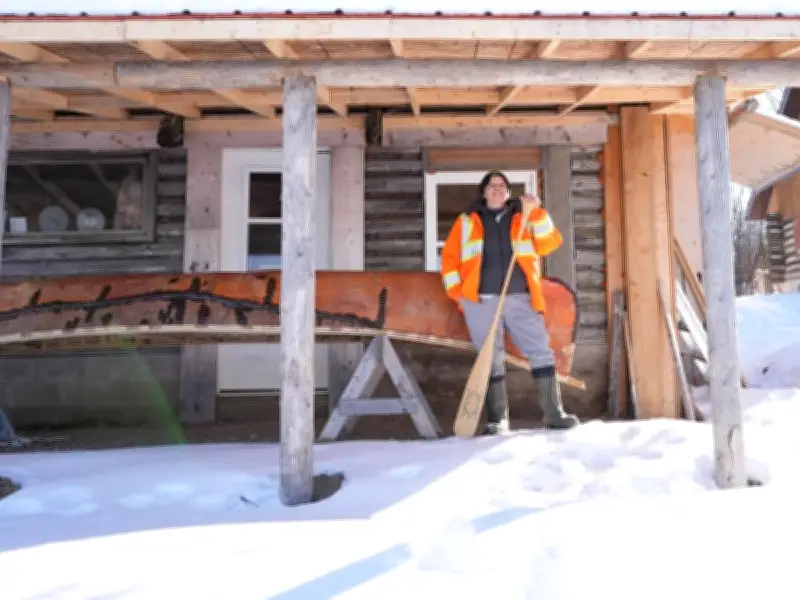
Janet Kohoko, a member of the Algonquins of Pikwakanagan First Nation and a Pinesi Paddle participant, cherishes the quiet moments on the water. "No one's talking. You can hear the water dripping off your paddle," she says. Kohoko is also a Pikwakanagan Land Guardian and helped build an 18-foot birchbark canoe on the shores of the Bonnechere River, which she hopes will join this year's journey.
Origins and mission of the Pinesi Paddle
The Pinesi Paddle was conceived by Kichi Sibi Trails, a volunteer-led organization that maps and revitalizes traditional trails and portages. Its membership includes Indigenous and non-Indigenous canoeists, historians, and community members. The paddle is named after Constant Pinesi, Grand Chief of the Algonquins at the time of Bytown's establishment in the 1820s, and retraces routes he would have known as his people were displaced by European settlers.

For Kohoko, the journey has deepened her connection to ancestral history. "Everything revolves around [the Ottawa] River for us," she says. The land now occupied by Canada's capital has always been a significant meeting point for Algonquin people, and the paddle reasserts that ongoing presence.
Historical context and displacement
In 1842, the superintendent of the Indian Department for British North America wrote that Algonquin tribes "could no longer procure a livelihood" from hunting in their territory, which had been "entirely ruined" by settler incursions. An 1857 petition from a group of Algonquins requested lands for a settlement on the shores of Golden Lake, where Pikwakanagan is today and where they had already resided for generations.
Wendy Jocko, president of Kichi Sibi Trails and a direct descendant of Chief Pinesi, emphasizes the continuity of the tradition: "Two hundred years [ago] they were going up and down the Kichi Sibi in canoes. And we're still going up and down the Kichi Sibi in canoes. Although we're 200 years later, we're still floating around."
Community and impact
Jordan Two-Axe Kohoko, a Pikwakanagan Land Guardian and Algonquin representative on the Kichi Sibi Trails board, recalls that during the first paddle in 2024, he doubted the group's ability to reach their destination. However, the crew learned to pull together. This year's journey includes invitees from the Mohawk community, further broadening the coalition.
The paddle also serves as a reminder of the ongoing and historic Algonquin presence along the Ottawa River, countering narratives of erasure. Over 30 paddlers are expected to participate, facing challenges such as rapids, headwinds, and bugs, but finding meaning in the shared experience and quiet reflection on the water.