B.C.'s Budget Gamble: Invest in Flood Prevention Now or Pay Much More Later
Tyrone McNeil and Lina Azeez: Acknowledging flood risks while refusing to fund mitigation measures is not a strategy — it's a dangerous gamble with public money, community safety, and livelihoods already stretched thin by repeated disasters.
The Cost of Inaction
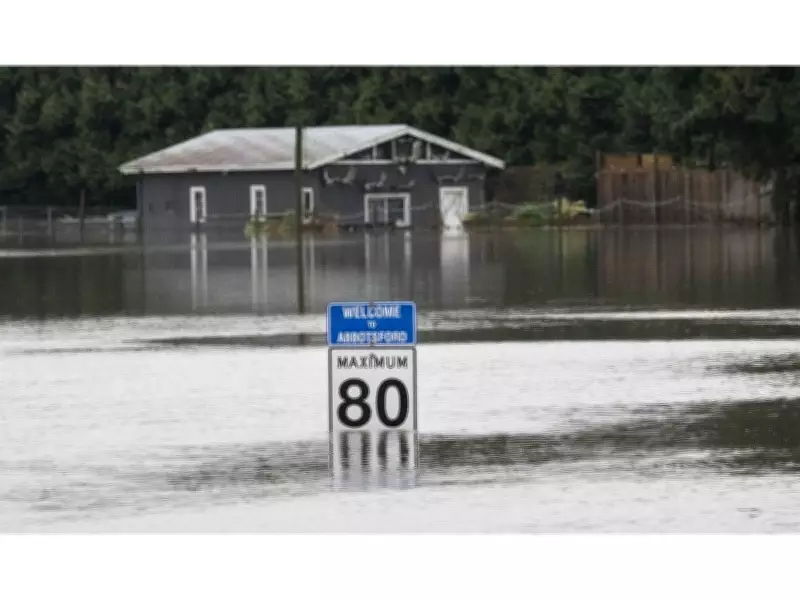
Last December, an atmospheric river settled over British Columbia's Fraser Valley, unleashing devastating floods that caused at least $74 million in insured losses. The actual economic damage likely tripled that figure when uninsured costs were factored in. This marked the Lower Mainland's third major flood disaster within just five years, highlighting a worsening pattern of climate-driven emergencies.
Despite this clear and present danger, the provincial government tabled a budget two months later containing zero new dollars for flood prevention initiatives. This glaring disconnect between documented risk and fiscal planning should alarm all British Columbians, according to experts monitoring the situation.

Human and Economic Consequences
For evacuated families, flooded farmers, and business owners watching inventory wash away, this represents more than abstract policy failure. It's a recurring crisis exacerbated by governmental preference for reaction over prevention. For the broader population, it's a growing liability that becomes more expensive with each year of delay.
The economic argument for integrated floodplain management has never been clearer. According to the Canadian Climate Institute, every dollar invested today in climate adaptation and disaster mitigation can return fifteen dollars in economy-wide benefits. This represents one of the most cost-effective investments governments can make.
Projected Costs of Climate Inaction
The climate institute estimates that climate-driven hazards including extreme rainfall, flooding, and related public infrastructure damage could cost Canada $14 billion annually by the 2050s. Without adaptation measures, this figure could climb to $19 billion by the 2080s. Separate research from the World Resources Institute found that annual flood damage across Canadian urban centers already reached $3.28 billion in 2010 and could soar to $9 billion by 2030 without stronger mitigation efforts.
Critical Infrastructure at Risk
This is far from a niche environmental concern. The Lower Mainland serves as Canada's gateway to global markets, hosting critical transportation corridors, agricultural lands, ports, and industries that underpin provincial and national supply chains. When highways flood, rail lines wash out, and farms submerge, the consequences reverberate nationwide. Investing in floodplain security represents both a public safety imperative and a long-term economic strategy essential for regional stability.
The Reactive Cycle of Failure
Despite overwhelming evidence supporting proactive investment, British Columbia remains stuck in what the Lower Fraser Floodplains Coalition accurately describes as a destructive spin cycle. Following each flood event, governments divert millions — sometimes billions — of public funds toward emergency response, disaster recovery, and infrastructure repair, often rebuilding the same failure-prone systems in identical high-risk areas.
Repeatedly patching damaged dikes, repairing washed-out roads, and compensating agricultural losses after disasters proves far more expensive over time than systematically building resilience from the outset. This reactive approach constitutes not merely policy failure but fiscal irresponsibility of the highest order, according to analysts studying the pattern.
The choice facing British Columbia's leadership is stark: invest meaningfully in flood prevention now or commit future generations to exponentially higher costs, greater safety risks, and continued disruption of communities and economies already pushed to their limits by climate realities.