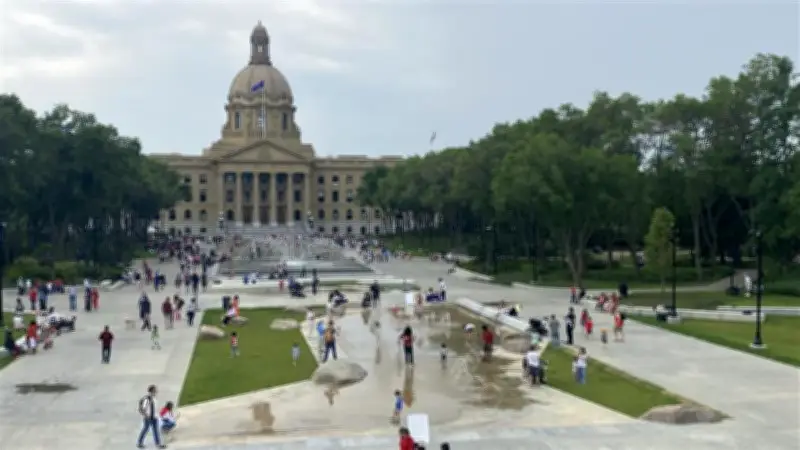
Canada Day 2026 celebrations at the Alberta legislature reflected the pressing issues of the moment, according to a historian. The event, which drew thousands to the provincial grounds, served as a lens through which to view contemporary Canadian concerns, from climate change to national unity.
Historian's Perspective on National Celebrations
"Canada Day celebrations have always mirrored the currents of the time," said historian Dr. Emily Carter of the University of Alberta. "In 2026, we see themes of reconciliation, environmental awareness, and a renewed focus on community resilience woven into the festivities." Carter noted that the choice of performers, speeches, and even the layout of the celebrations often reflect broader societal priorities.
The Alberta legislature event featured Indigenous drumming circles, a sustainable food market, and speeches emphasizing unity. "These elements are not accidental," Carter added. "They speak to where we are as a nation—grappling with our past while trying to build a more inclusive and sustainable future."

Severe Weather Disrupts Canada Day Across the Country
While celebrations proceeded in Edmonton, other parts of Canada faced significant weather challenges. Canadian Heritage cancelled the Canada Day evening show at LeBreton Flats in Ottawa, including fireworks, due to a severe thunderstorm warning. The Ottawa area received 100 mm of rain on Canada Day, causing localized flooding and event cancellations.
Montreal was under a severe thunderstorm watch with risks of wind gusts, hail, and even tornadoes. The city's outdoor festivities were scaled back as a precaution. In Toronto, severe thunderstorm warnings ended late in the evening after heavy rain and lightning passed through the Greater Toronto Area.
Calgary's Canada Day celebrations faced a storm risk, with Environment Canada issuing alerts for the region. Despite the threats, many Calgarians enjoyed local festivities, though attendance was lower than expected due to the weather.
Weather Impacts Across Regions
In Manitoba, a Whyte Ridge storm was confirmed as a tornado, and the Rossburn tornado rating was upgraded. Hundreds of residents in northeastern Ontario were without power amid a heat warning, with a severe thunderstorm watch in effect. The heat wave also prompted Ontario's orange heat warning, which officials emphasized is about more than just temperature—it signals potential health risks.
"The orange heat warning is a call to action," said Dr. Sarah Mitchell, a public health official in Ontario. "It reminds us to check on vulnerable neighbors, stay hydrated, and avoid strenuous outdoor activities during peak heat."
Canada Day Address and National Unity
Prime Minister Mark Carney emphasized national unity in his Canada Day address, delivered from Ottawa after his trip to Alberta was cancelled due to thunderstorms grounding his plane. "Canada's strength lies in our diversity and our ability to come together, even in challenging times," Carney said. He also discussed "serious immediate priorities" with Inuit leaders, focusing on Arctic sovereignty and climate adaptation.
New Brunswick Premier Susan Holt echoed this sentiment, stating the province will "fight for a united and strong Canada, forever." The remarks came amid ongoing discussions about provincial-federal relations and the future of Confederation.
Community Celebrations and Citizenship
Despite the weather, many communities held Canada Day events. In Regina, thousands attended celebrations in Wascana Park, featuring live music and a fireworks display. A Regina Elvis tribute artist, dubbed "iconic" by fans, performed for crowds. In Saskatoon, a service dog received a diploma alongside a high school graduate, highlighting the inclusive nature of the day.
New Canadians celebrated their first Canada Day as citizens. "I'm so blessed," said Maria Santos, a recent immigrant from the Philippines. "This day means everything to me—it's the start of my new life in a country that values freedom and opportunity."

Looking Ahead
As Canada Day 2026 concludes, the historian's observation rings true: the celebrations reflected the nation's current realities—both the challenges and the triumphs. From severe weather to unity speeches, from Indigenous recognition to new citizens, the day encapsulated the complex tapestry of Canadian life.