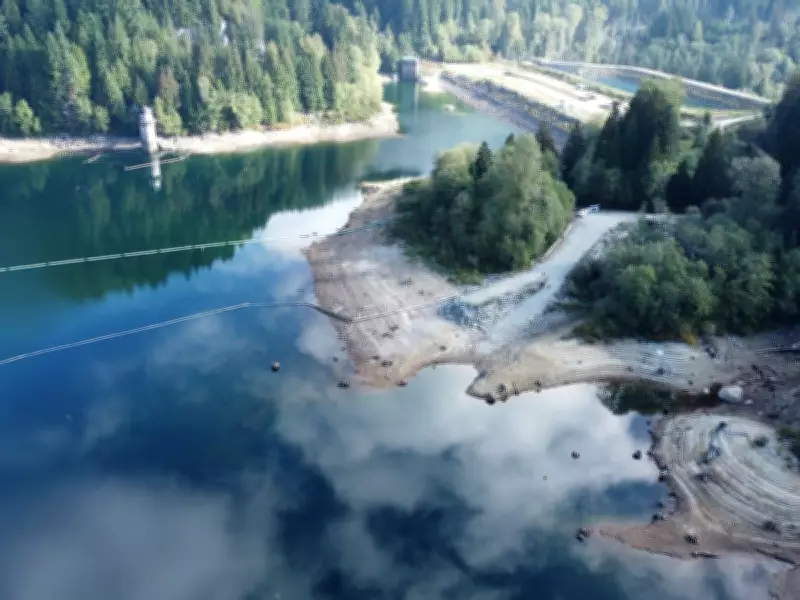
Water conservation alone will not meet Metro Vancouver’s future water demands as climate change poses significant threats to the region’s water quality and supply, according to regional officials.
Doubling Capacity at Coquitlam Reservoir
Plans are underway to double the capacity to withdraw water from the Coquitlam Reservoir, the largest of Metro Vancouver’s three drinking water sources. By constructing a deeper intake, the reservoir’s total storage capacity could increase from approximately 150 billion litres to nearly 250 billion litres. This project is expected to be completed by the late 2030s.
Addressing Water Quality Issues
Climate change is anticipated to cause more frequent and intense rainstorms, leading to landslides and increased sediment in the water. Although the Coquitlam Reservoir currently has the lowest turbidity among the region’s watersheds, a filtration system will be necessary to maintain water quality. Metro Vancouver is considering a filtration system similar to the one installed for the Seymour and Capilano watersheds in 2010.

Heidi Walsh, director of watersheds and environment at Metro Vancouver, explained that the Lower Mainland has many glacial deposits with fine sediment and silt. Intense rainfall can saturate these deposits, triggering landslides that wash fine turbidity into feeder creeks and the reservoir.
Project Timeline and Budget
The Coquitlam Lake Water Supply Project includes a new water intake, a water supply tunnel, and a new filtration treatment plant. Construction is slated to begin in the early 2030s and conclude in the late 2030s. A budget of $254 million has been approved to determine the project’s scope, timeline, and costs.
Currently, Coquitlam water is unfiltered and treated with ozone and UV light, followed by a small amount of chlorine. The new filtration system will ensure water quality even under changing climate conditions.
Climate-Related Risks
Climate change-related drought can also increase the risk of wildfires, which could further contaminate the water supply. The report to the regional district’s water committee highlights that a warmer climate may lead to higher turbidity and other water quality issues.
Metro Vancouver has already begun increasing downstream infrastructure and building a pipeline through Coquitlam. Staff are now in the early design phases for the intake, tunnel, and treatment plant.