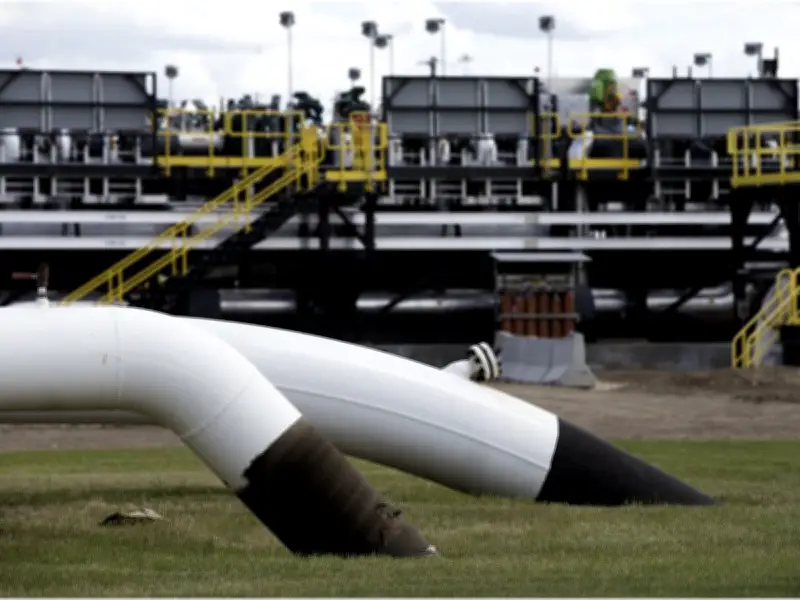
The Trans Mountain pipeline has reached full capacity for the first time since its expansion was completed, boosting the pipe's total carrying capability to 890,000 barrels daily, and demand for the pipeline has exceeded capacity, according to reports in June 2026.
Red herrings die when reality intrudes
Back in May 2025, British Columbia Premier David Eby said, “We do have a pipeline… that is not being used to capacity and that feels like a much better place to start the conversation.” That same month, Steven Guilbeault, then a member of Prime Minister Mark Carney’s cabinet, said, “I think before we start talking about building an entire new pipeline, maybe we should maximize the use of existing infrastructure.” They were referring to the Trans Mountain pipeline, which carries crude and refined products from Edmonton, Alberta, to the British Columbia coast.
Now, with the pipeline at full capacity, Kenneth Green, senior fellow with the Mathison Energy Research Initiative at the Fraser Institute, argues that opponents should withdraw their opposition to a proposed new pipeline from Alberta to a Pacific port. “So, Mr. Eby and Mr. Guilbeault, will you now withdraw your opposition to the proposed new pipeline the Alberta government hopes to get built from Alberta to a Pacific port to carry its oil exports to lucrative markets in Asia?” Green writes.

Political tactics and the MOU
Green suggests that it is naive to expect certain political figures to acknowledge the tactics they use to oppose pipelines. “Tactics of this sort, the red herring, the distracting canard, are all too often the primary stock-in-trade for Canada’s political elite. They wouldn’t have much to say without them,” he says.
He also questions Prime Minister Carney’s sincerity regarding the proposed pipeline. In November 2025, the Alberta government and the Carney government signed a Memorandum of Understanding (MOU) that grants Alberta exemptions from certain federal regulations and offers a potential pathway to a new pipeline to B.C. In exchange, the Alberta government agreed to give away every bit of energy-sector autonomy other than the drapes. Carney has emphasized that the pipeline plan remains highly contingent on buy-in from people such as Eby, First Nations, and Guilbeault’s green constituency.
Oil market dynamics and future demand
Turbulence in world oil markets due to the Iran war has made Canadian oil more attractive, and the Trans Mountain expansion has been instrumental in priming the pump for future sales to Asian markets. The pipeline filled up only two years after completion, with a large backlog of demand for even more pipeline capacity to get oil to lucrative markets beyond the United States.
Green concludes by asking whether opponents are ready to retract their opposition in the face of reality, and whether Carney is ready to stop with the constant qualifiers about Alberta’s compliance with federal conditions for a pipeline. He notes the silence in response.