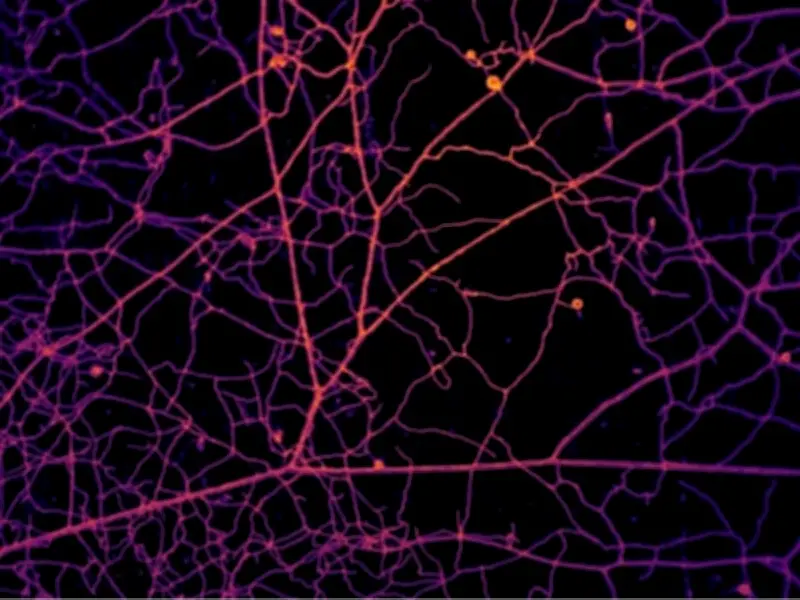
Scientists have mapped a dense network of thread-like fungi that crisscrosses across an array of biomes while hiding just beneath the Earth's surface. Known as arbuscular mycorrhizal fungi (AM), these microscopic organisms carry water and nutrients to 70 per cent of plant species and help keep a vast amount of carbon out of the atmosphere.
Massive Scale of Fungal Network
The study, published Thursday by the Society for the Protection of Underground Networks (SPUN), found that the biomass of mycorrhizal fungi was four to six times that of the human population. Paced end-to-end, the fungal pathways would reach 110 quadrillion kilometres in length, the study predicted. That would make it long enough to wrap around the planet 2.7 trillion times — and cover the distance from Earth to the Sun 750 million times.
Dense Networks in Soil
“There could be up to 10 metres (32ft) of mycorrhizal network in just a teaspoon of soil,” Justin Stewart, a lead author in the study, said in the release announcement. AM networks were found in nearly all biomes, with grasslands containing 40 per cent of their biomass. The densest structures were found in the grasslands of South Sudan, the Everglades in Florida and the Tibetan plateau.

Research Methods and Findings
With the help of an international network of scientists and researchers, SPUN analyzed more than 16,000 soil samples from nine different biomes. Machine learning models that were trained on 300,000 lab-grown AM filaments allowed researchers to predict the fungi’s growth in areas that weren’t sampled.
“With the emergence of new technologies in high-resolution imaging, machine-learning and robotics, we are starting to reveal what has long been hidden under our feet,” the co-lead author, Dr. Corentin Bisot, said. “We are learning how the complex bodies of network-forming fungi transport nutrients and help regulate the climate.”
Ancient Symbiosis
The map, which is available online, reveals the scope of a mutually beneficial relationship between plants and fungi that dates back 450 to 500 million years. The mycorrhizal fungi, embedded to roots, act as a supply chain drawing nutrients crucial to plant growth from areas dozens of times greater than the plant could access alone. In exchange, the fungi receive vast amounts of carbon, estimated to be around four billion metric tons each year.
Implications for Climate and Food Security
The study is the first to attempt to calculate the full extent and density of AM structures. The researchers say future attempts would benefit from samples taken in areas where data is lacking, such as deserts, tropical forests and tundras.
“Mycorrhizal fungi have shaped life on earth for hundreds of millions of years, but we still understand too little about how the infrastructure of these living transport systems is distributed across the planet,” Merlin Sheldrake, a co-author and biologist, said. He added: “This study is an exciting step towards understanding how this planetary circulatory system operates and suggests ways that we can better work with fungi to help address many of the unfolding challenges of our times, from food security to climate change.”