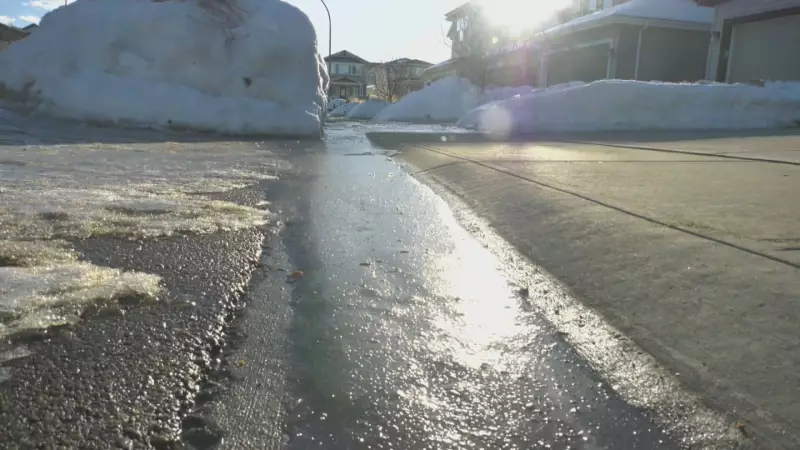
The rapid melting of a significant late-2025 snowfall is now creating challenges for winter activities and public safety in Edmonton. The unseasonably warm conditions following the major snow event are forcing adjustments and raising concerns across the city.
From Winter Wonderland to Slushy Streets
After a massive snowfall blanketed the region at the end of 2025, a shift in weather patterns has initiated a pronounced thaw. This transition is directly impacting traditional winter pastimes. Outdoor ice rinks, popular sledding hills, and maintained cross-country ski trails are deteriorating faster than usual, shortening their seasonal availability for residents.
The melt is creating unpredictable and often hazardous surface conditions. What was recently packed snow is now turning to slush, ice, and pooling water. This affects everything from casual walks in river valley parks to organized sporting events that rely on stable, frozen ground.

Safety Implications of the Rapid Thaw
Beyond disrupting recreation, the melting snow introduces several safety risks. City crews are shifting focus from snow clearing to managing water runoff and addressing newly formed ice patches on roads and sidewalks. The freeze-thaw cycles, particularly overnight, are leading to widespread black ice, a major pedestrian and vehicular hazard.
Local authorities are reminding Edmontonians to exercise increased caution. Pedestrians are advised to wear proper footwear with grip, and drivers are warned to adjust their speed for potentially icy conditions, even when roads appear merely wet. The situation underscores the challenges of maintaining a "winter city" identity amid fluctuating climate conditions.
Broader Context and Community Response
This event occurs amidst other notable provincial news, including a provincial order for a fatality inquiry into a man's death in an Edmonton emergency room. The convergence of public health and public safety issues highlights the multifaceted demands on city and provincial infrastructure and services.
Community organizers are being forced to adapt or cancel planned winter festivals and activities. The economic impact on businesses that thrive during stable winter conditions, from equipment rentals to outdoor hospitality, is also a concern. Residents are encouraged to check the status of events and facilities before heading out, as conditions are changing daily.
While a mid-January thaw is not uncommon, the intensity of the preceding snowfall and the speed of the current melt make this instance particularly disruptive. It serves as a practical reminder of the logistical and safety planning required to navigate Canadian winters, where weather can shift from deep freeze to rapid thaw within a short timeframe.