Emergency crews in the Philippines have detected possible signs of life within the rubble of a collapsed waste facility, offering a glimmer of hope days after a catastrophic garbage avalanche killed at least four people and left dozens missing.
Race Against Time After Catastrophic Collapse
The disaster struck a waste segregation facility in the Binaliw area of Cebu city, located in the central Philippines. Rescue operations have been ongoing since the structure gave way, burying workers and equipment under tons of refuse. On Saturday, January 10, 2026, teams using specialized listening devices and canine units picked up indications that someone might still be alive deep within the compacted debris.
This discovery has intensified the already frantic efforts at the site. Heavy machinery is being used cautiously to move larger piles of garbage, while teams of rescuers dig by hand in targeted areas, balancing speed with the need to avoid triggering further shifts in the unstable mound.

Ongoing Search Amidst Tragedy and Hazard
The confirmed death toll stands at four individuals, but authorities fear that number could rise significantly. Dozens of people who were working at the facility at the time of the collapse remain unaccounted for, leaving families in agonizing uncertainty. The search is complicated by the hazardous nature of the site, which contains not only household waste but potentially toxic materials and decomposing organic matter, posing risks of methane gas accumulation and infection.
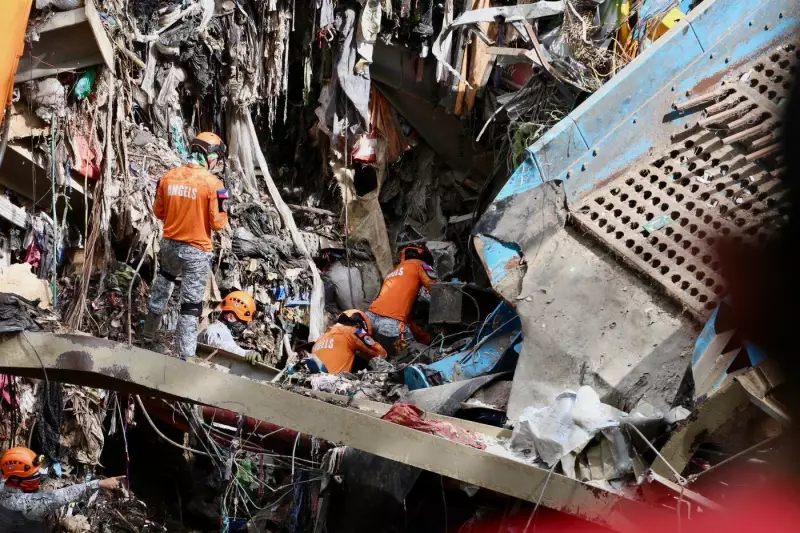
Photographs from the scene, credited to AP photographer Jacqueline Hernandez, show the scale of the devastation, with rescue personnel in bright orange vests swarming over a mountainous, chaotic landscape of trash. The images underscore the dangerous and desperate conditions under which the operation is proceeding.
A Broader Context of Infrastructure and Risk
While this tragedy unfolds overseas, it casts a spotlight on critical issues of waste management, infrastructure safety, and emergency preparedness—topics highly relevant to communities in Canada and worldwide. The incident serves as a stark reminder of the human and environmental risks associated with large-scale waste processing facilities, especially in regions prone to heavy rainfall or with less stringent construction regulations.
As of the latest reports, the rescue mission in Binaliw continues non-stop. The faint signs of life detected have provided a powerful motivation for crews who are working against the clock, hoping to pull survivors from the wreckage against all odds.