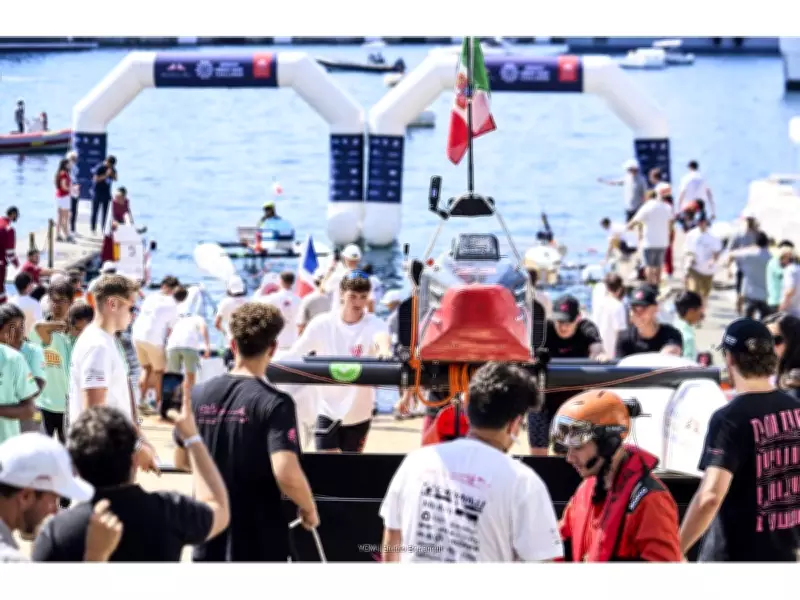
The Yacht Club de Monaco is set to host the 13th edition of the Monaco Energy Boat Challenge from July 8 to 11, 2026. This premier event serves as an open-air innovation laboratory dedicated to accelerating the energy transition within the yachting industry. Supported by prominent partners including the Prince Albert II of Monaco Foundation, UBS, BMW, and SBM Offshore, the challenge unites students, universities, technical colleges, and industry professionals in a collaborative effort to develop sustainable maritime solutions.
A Global Gathering for Sustainable Innovation
This year's competition will feature 43 teams representing 21 nationalities from across Europe, North America, the Middle East, and Africa. All participants share the common objective of reconciling performance with energy efficiency and reduced environmental impact. Over 1,000 students and young engineers are involved throughout the year, with the event serving as a pivotal career step at the intersection of education, applied research, and integration into the maritime sector.
Fostering Collective Intelligence
Bernard d'Alessandri, Director and General Secretary of the Yacht Club de Monaco, emphasizes the event's role as a platform for exchange and knowledge sharing. "By bringing together hundreds of young engineers, we reaffirm our commitment to making Monaco a testing ground where students, manufacturers and institutions can collaborate on sustainable solutions for the boats of tomorrow," he states. "The diversity of profiles and cultures is a key asset in stimulating innovation and accelerating the maritime sector's energy transition, driving our collective 'Monaco, Capital of Advanced Yachting' vision."

Technological Advancements and Project Diversity
The progress achieved in previous editions is reflected in increasingly sophisticated projects presented at the 2026 challenge. Notable innovations include:
- Predictive energy management systems from HydroVinci (France)
- High-speed, high-efficiency propulsion technology from Hydros Team (Indonesia)
- Digital twin applications from Cambridge University Riviera Racing (UK)
- Bio-sourced materials development from Team Sea Sakthi (India)
Technological approaches continue to evolve with greater emphasis on eco-design, hydrogen-electric hybridisation, and smart energy management. Solutions are being developed not only for competitive performance but also for their potential industrial applications in the broader maritime industry.
Energy Systems and Team Categories
The prototypes registered for the 2026 challenge demonstrate diverse approaches to sustainable propulsion:
- 33 teams feature battery-electric systems
- 9 teams incorporate hydrogen technologies
- 1 team uses methanol-based systems
- 9 teams employ foil technology for enhanced efficiency
Teams are divided into four distinct categories, with the AI Class representing a particularly significant development. Introduced in 2025, this category has quickly become a driving force within the competition, with 11 teams registered for 2026. The AI Class reflects a fundamental shift in maritime technology, marked by the growing integration of artificial intelligence in boat design, navigation systems, and energy management optimization.
The Future of Maritime Innovation
Projects in the AI Class focus on achieving full autonomy through the combination of sensors, advanced algorithms, and onboard decision-making systems capable of assisting piloting and maneuvering in real-world sea conditions. This represents the cutting edge of maritime technology development, where artificial intelligence meets sustainable energy solutions.
The Monaco Energy Boat Challenge continues to serve as a crucial incubator for the next generation of maritime engineers and sustainable technologies. By providing a unique environment for testing prototypes and sharing knowledge, the event accelerates the development of practical solutions that will shape the future of yachting and maritime transportation worldwide.