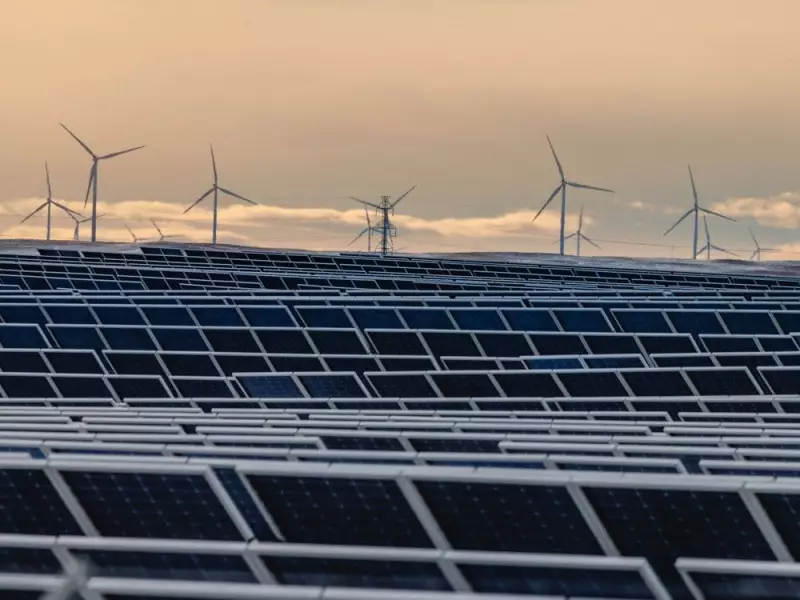
Rural communities across Alberta have discovered a remarkable economic lifeline that operates independently of oil price fluctuations and requires no tax increases. In 2025, wind and solar projects generated $70 million in tax revenue for 26 Alberta counties, providing steady funding for essential services and infrastructure.
The Revenue Boom and Sudden Slowdown
This year's impressive $70 million haul represents a 30% increase from last year's $54 million and a staggering 151% jump from the $28 million collected just two years ago. The funds support critical community needs including road maintenance, emergency services, and recreation facilities that keep rural areas vibrant.
However, this growth story faces an uncertain future. Every project contributing to this year's revenue stream received approval before August 2023, when the provincial government implemented its moratorium on renewable energy development. The pipeline of future projects that would have sustained this revenue growth has largely evaporated.

The Cost of Cancelled Projects
Since the moratorium took effect, 53 renewable energy projects have been cancelled across Alberta. Using conservative estimates, these projects would have generated approximately $84 million annually for municipal governments once operational. This lost potential exceeds the entire revenue growth witnessed this year.
The impact varies significantly by region. Paintearth County currently receives $5.3 million annually from renewable projects but has lost $14.2 million in potential revenue from cancelled developments—nearly three times its current intake. Medicine Hat has seen $4.4 million in projects disappear while receiving just $100,000 currently. Taber faces similar circumstances with $4.8 million in lost opportunities, more than its current revenue.
Real Community Consequences
These financial figures translate into tangible community impacts. The lost revenue means fewer fire trucks purchased, roads left unpaved, and recreation programs that won't receive funding. The stable nature of renewable energy revenue—with projects typically operating for decades—makes it particularly valuable for long-term community planning.
Existing projects approved before the moratorium continue to provide reliable income, but the absence of new developments threatens future growth. The situation has particularly affected corporate renewable energy procurement, where companies like banks, retailers, and technology firms purchase clean power to meet sustainability targets.
Only 58 megawatts of new corporate deals were announced in 2024 and 2025 combined, representing a 96% decline from the previous two years. These corporate power purchase agreements previously provided revenue certainty that helped developers secure project financing.
Between 2019 and October 2025, corporate agreements enabled 4.1 gigawatts of renewable projects in Alberta, leading to $6.4 billion in capital investment, 6,200 jobs, and enough energy to power 1.7 million homes. The current investment climate puts similar future benefits at risk.