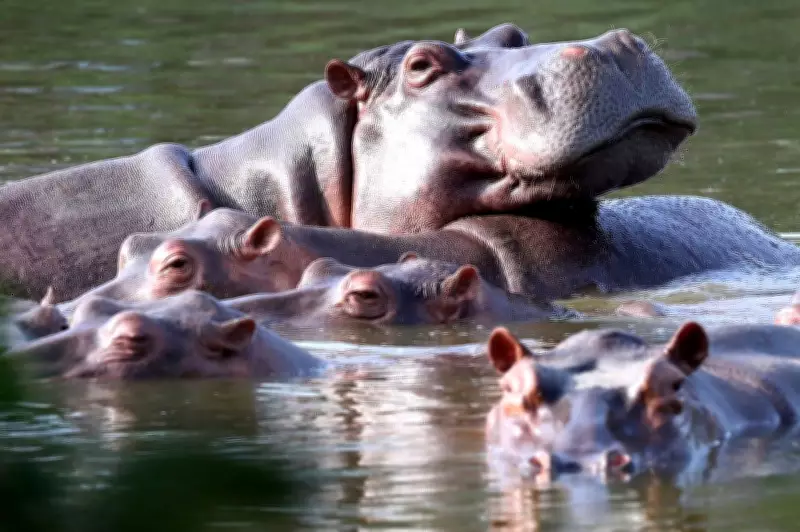
The son of an Indian billionaire has offered to take in hippos descended from those brought to Colombia by drug kingpin Pablo Escobar, aiming to save them from being killed.
Ambani's Proposal
Anant Ambani, son of tycoon Mukesh Ambani, head of multinational conglomerate Reliance Industries, formally asked the Colombian government to stay a decision to kill the animals, which have wreaked havoc on rivers. He requested permission to relocate them to his Vantara animal centre, a vast zoo that describes itself as 'one of the world's largest wildlife rescue, care and conservation centres.'
The centre houses hundreds of elephants, 50 bears, 160 tigers, 200 lions, 250 leopards and 900 crocodiles, among other animals, according to India's Central Zoo Authority. This has raised concerns among experts about its ability to manage such a massive intake, including critically endangered species. The animal centre is located alongside the Reliance Jamnagar Refinery Complex, which the conglomerate calls the world's largest crude oil refinery, where temperatures can exceed 40 C.

Ambani's Plan
Ambani says he has a proposal for a veterinary-led capture and transport, as well as a 'purpose designed naturalistic setting for the hippos,' according to a statement. 'Vantara has the expertise, infrastructure and resolve to support this effort, entirely on Colombia's terms,' the statement said. 'These 80 hippos did not choose where they were born, nor did they create the circumstances they now face. They are living, sentient beings, and if we have the ability to save them through a safe and humane solution, we have a responsibility to try.'
Escobar's Hippos
Hippos are native to Africa and can weigh up to several tonnes. Escobar brought them to Colombia in the 1980s. After the drug kingpin was hunted down and killed by authorities in 1993, the animals went into the wild, living along Colombia's Magdalena River, where they have been known to attack fishermen.