Edmonton's Infill Development Threatens Historic Urban Gardens and Trees
Strolling through Edmonton's established neighborhoods reveals a distinctive layered landscape. Towering elms, ashes, and aged poplars create a canopy overhead, while lilacs line fence boundaries, currants nestle beside garages, and Saskatoon bushes appear as permanent fixtures. Each spring, rhubarb and horseradish emerge in backyards, their origins often forgotten but their presence enduring.
These are not random occurrences but living remnants of Edmonton's historical growth patterns. Prior to the 1950s and the expansion of suburban development and global plant supply chains, most of Edmonton's trees and shrubs originated from nearby forests, local nurseries, or neighboring gardens. Residents planted species that could thrive in the local climate, with gardens serving practical, resilient, and personal purposes rather than merely decorative functions.
The Practical Legacy of Edmonton's Historic Gardens
Shrubs such as currants, gooseberries, and chokecherries were valued for their reliability rather than fashion. Lilacs and caragana hedges provided more than aesthetic appeal—they functioned as windbreaks, snow traps, and creators of warmer micro-climates that enabled gardens to flourish in Alberta's challenging environment.

Over decades, these private gardens quietly wove together a shared urban ecosystem that delivered multiple benefits: summer shade, wind protection, food sources for both people and birds, progressively improving soil quality, and a profound sense of rootedness and belonging to place.
The Steady Erosion of Urban Garden Systems
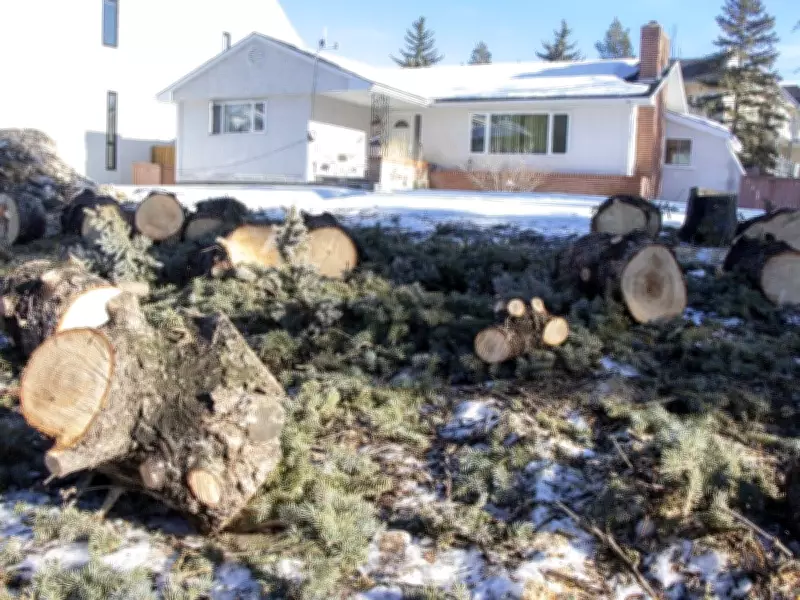
Today, this valuable legacy faces gradual but persistent disappearance. When older homes undergo infill redevelopment, the loss is frequently characterized narrowly as simply removing a few trees and replacing lawn space with structures. However, the actual erasure runs much deeper and proves more difficult to quantify.
The layered garden system itself—including understory shrubs, berry patches, informal hedges, and soil cultivated over generations—rarely survives redevelopment. These elements lack formal protection, systematic inventory, or straightforward replacement mechanisms. New yards, when they exist at all, typically feature simplified designs: lawn areas, a couple of ornamental trees, and perhaps a patio. While these choices are understandable from a development perspective, they fail to recreate what has been lost.
Unlike large public parks designed for permanence, these private gardens derived their value from cultural significance and cumulative development rather than formal planning. Once eliminated, they generally disappear permanently.
Beyond Nostalgia: Recognizing Comprehensive Urban Forestry
This perspective does not represent mere nostalgia for the past nor opposition to urban change. Rather, it emphasizes recognizing that Edmonton's urban forest extends beyond street-lined trees to include the interstitial spaces between houses—areas where residents historically cultivated food, exchanged plant cuttings, and shaped their yards to accommodate life on the northern plains.
The discussion also highlights how the benefits of trees and gardens distribute unevenly across communities. Higher-income households and neighborhoods typically retain larger lots, mature trees, and private green spaces while possessing greater capacity to compensate when these assets diminish.
As Edmonton continues its infill development trajectory, preserving these layered garden ecosystems represents more than environmental conservation—it constitutes safeguarding cultural heritage, maintaining ecological resilience, and honoring the practical wisdom of previous generations who cultivated landscapes specifically suited to Edmonton's unique climate and character.