Tracks in the Snow: A Journey Through Alberta's Winter Wildlife
On a crisp February morning, the sun shone brightly over the Alberta plains, promising a sparkly day ahead. Though the temperature hovered at a chilly -4°C, it felt considerably warmer compared to the recent deep freeze. In a hollow just north of Calgary, frost glittered everywhere—lining fences, coating roadside grass, and shimmering on twine dancing in a light breeze. The blue sky above cast a cyan tinge across the landscape, softening harsh shadows with a soft grey hue.
Wildlife Encounters in the Frosty Fields
As the day unfolded, signs of life emerged. Gophers ventured out, their movements skittish against the bright snow. No hawks were visible, but ravens circled overhead, ready to swoop down. Further out in a field, a coyote darted across, a reminder of the constant vigilance needed in the wild. The frost in the hollow proved to be an anomaly; east of Airdrie, the open country showed little snow, with pasture grass and field stubble peeking through. However, ditches were filled with drifts sculpted by the wind, each adorned with a tapestry of tracks.
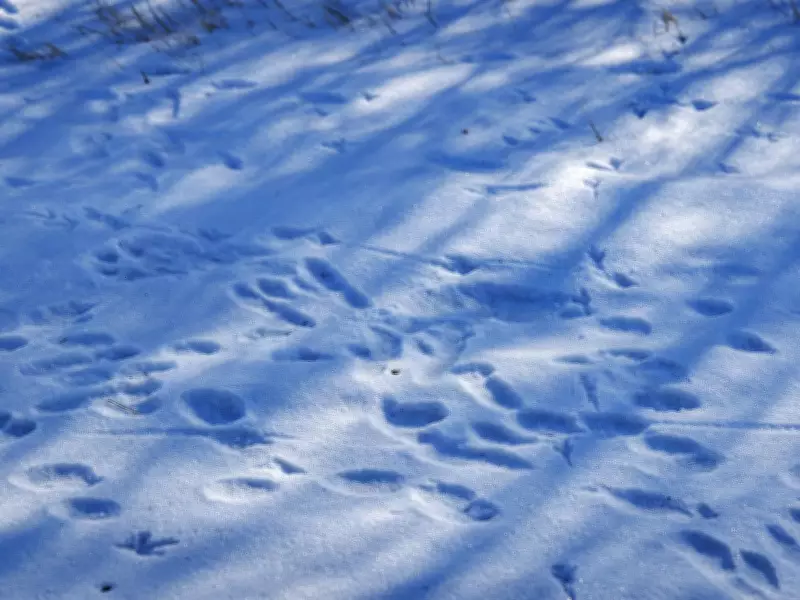
Jackrabbit and partridge tracks crisscrossed the snow near Standard, Alberta, while pheasants left their marks near Irricana. These tracks served as irrefutable proof of the animals' presence, even if they had long since moved on. Tracks are not just footprints in the snow; they are stories etched into the landscape, revealing the passage of living beings.

The Legacy of Ancient Tracks
This fascination with tracks extends beyond the present day. Long ago, at St. Mary Reservoir, depressions the size of garbage can lids were discovered—tracks left by a woolly mammoth that strolled through southern Alberta about 13,000 years ago. While we may never see such a creature, these ancient tracks offer a tangible connection to the past, allowing us to imagine mammoths wandering the plains below the Porcupine Hills.
Tracks are proof that something alive has passed by, bridging the gap between past and present. As the journey continued, a snowy owl nearly went unnoticed on a power pole east of Beiseker, a subtle reminder to stay observant in the winter wilderness. The drive through Alberta's snow-covered fields became a quest for tracks, each set telling a unique tale of survival and movement in the harsh yet beautiful winter environment.