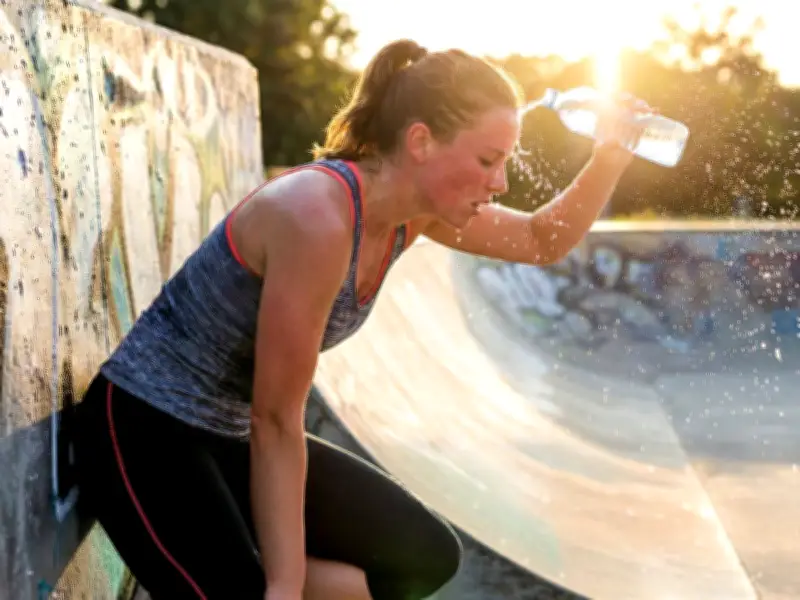
Exercising in hot temperatures places significant stress on the body, far beyond what occurs in comfortable environments. The core issue involves blood flow: during exercise, the body shuttles blood to working muscles, but in heat, the skin also requires extra blood flow for sweating and cooling. According to Riana Pryor, director of the Hydration, Exercise, and Thermoregulation (HEAT) Laboratory at the University of Buffalo, “Your body has to work almost twice as hard to do both of those things simultaneously.” This makes the same workout feel much harder in summer than in spring.
Gradual Acclimation to Heat
Rebecca Stearns, chief operating officer at the University of Connecticut’s Korey Stringer Institute, advises against jumping into a regular workout on the first hot day. Instead, acclimate slowly by gradually increasing duration or intensity and incorporating more breaks. For example, start with a 15-minute session including walk intervals instead of a 30-minute run.
Repeated brief exposures to heat trigger body-wide adaptations: increased blood plasma volume, higher sweat rate, and lower core temperature and heart rate during exercise. Stearns explains, “Once you’re adjusted, it’ll feel less hard to exercise in that environment.” For professional athletes with sessions lasting at least an hour, acclimation takes about 10 to 14 days; shorter sessions require longer adaptation. Research also suggests that six consecutive days of a 40-minute hot bath after exercise can aid acclimation.

Hydration Before, During, and After Exercise
Starting exercise dehydrated causes core temperature to rise faster, making effort feel harder. A consensus statement in the British Journal of Sports Medicine recommends drinking 6 millilitres of fluids per kilogram of body weight two to three hours before exercising in heat (roughly 14 ounces for a 150-pound person). Consistent hydration throughout the day is also crucial, according to Pryor.
During exercise, the American College of Sports Medicine suggests consuming 7 to 10 ounces every 10 to 20 minutes to prevent more than a 2 percent decrease in body weight. After exercise, replace 100 to 120 percent of fluid lost by drinking 16 to 19 ounces for every pound lost. Thirst and urine darker than light yellow indicate dehydration. “It’s pretty likely that you’re dehydrated,” Stearns says if both signs are present.
Appropriate Clothing and Precooling
Opt for loose, lightweight, sweat-wicking fabrics like synthetic polyester blends or merino wool. Pryor notes, “If you notice sweat dripping… it means you don’t have airflow to the area, so you can’t cool yourself down.” A looser or lighter shirt allows air to flow.
Precooling can help: a cold shower for five to 10 minutes may keep you cooler for the first 10 to 20 minutes of exercise. Alternatives include air-conditioned rooms, ice vests, or rotating ice-water towels over large body parts. Drinking a cold slushy (crushed ice and water) before outdoor sessions modestly reduced core temperature in firefighters during the first 30 minutes, according to a study in Prehospital Emergency Care. Blend a favorite sports drink with ice for an electrolyte-packed version.
Adjusting Workouts and Recognizing Heat Illness
If a workout is planned with specific timing or pacing, consider cutting it short or slowing down due to weather. Stearns, a runner who dislikes heat, switches long runs to cooler days and earlier times, avoiding 10 a.m. to 5 p.m. Shaded trails feel cooler than sun-exposed routes, and loops allow easy bailouts.
Pryor emphasizes, “Really listen to your body and recognize that if you’re feeling worse than usual, then it’s probably time to slow down or take a little bit more water or a little bit of rest.” Watch for heat illness signs: heat edema (swollen hands), nausea, fatigue, dizziness, clumsiness, or irritability are precursors to heatstroke. “It’s time to stop the workout for the day,” she advises if these symptoms appear.