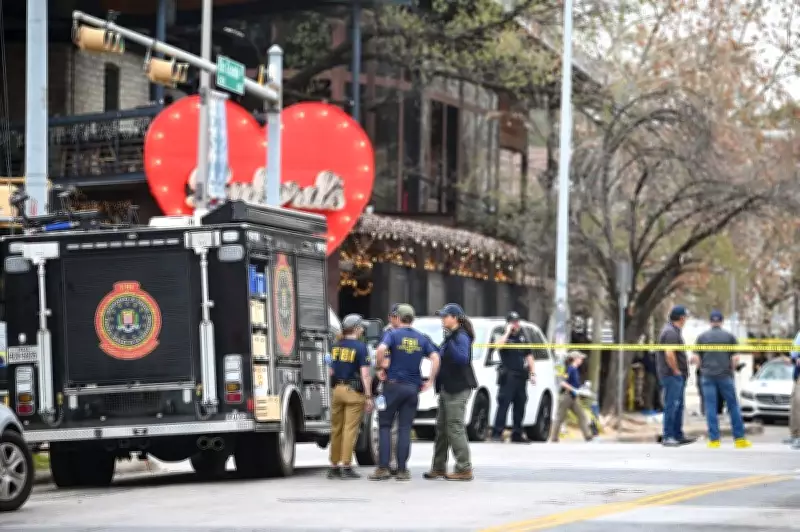
In a critical incident that has sparked widespread debate over the safety of autonomous vehicles, a driverless Waymo taxi obstructed first responders during the Austin terror attack on March 3, 2026. The shooting, which occurred outside Buford's bar on 6th Street, resulted in three fatalities and fourteen injuries, with emergency efforts momentarily hampered by the stalled robotaxi.
Footage Reveals Chaotic Scene
Online video footage captured the alarming moment when the Waymo vehicle became stuck in the middle of the street, directly in the path of an ambulance rushing to the scene. The incident unfolded around 2 a.m., as the autonomous car was attempting to pick up passengers, including Matthew Turnage, who recorded the clip. In the video, bystanders can be heard urgently shouting at the car to move, while the ambulance struggled to navigate around it.
Passenger Account and Emergency Maneuvers
Matthew Turnage explained that he and his friends had requested a ride via Uber after a night out, only to find the Waymo car immobilized. "We just so happened to get a Waymo car from Uber and when we found the car, it was trying to pick us up but got stuck in the middle of the street and blocked emergency vehicles for a couple of minutes," he told KXAN. Ultimately, a police officer intervened by entering the vehicle to clear the path, allowing paramedics to reach the victims via an alternative route within a minute.

Details of the Austin Shooting
The gunman, identified as Ndiaga Diagne, 53, opened fire outside the crowded bar using a handgun and a rifle, killing Ryder Harrington, 19, Savitha Shan, 24, and an unidentified victim. Police swiftly responded, shooting Diagne dead at the scene. Despite the obstruction, Rob Lukritz, chief of Austin Travis EMS, stated that the Waymo incident did not significantly delay the overall emergency response or affect patient outcomes. However, he confirmed that authorities are already in discussions with Waymo to address safety concerns and prevent future occurrences.
Broader Implications for Autonomous Technology
This event highlights ongoing challenges in integrating driverless vehicles into urban environments, particularly during high-stakes emergencies. Waymo, which expanded its services to Austin in 2024 as an alternative to traditional rideshares and public transport, operates fleets in several major U.S. cities, including San Francisco, Los Angeles, and Phoenix. The company now faces increased scrutiny over its protocols for handling unexpected situations, such as terror attacks or natural disasters.
As autonomous technology continues to evolve, incidents like this underscore the need for robust safety measures and clear communication between tech companies and emergency services. Stakeholders are calling for enhanced training and real-time coordination to ensure that driverless cars do not compromise public safety in critical moments.