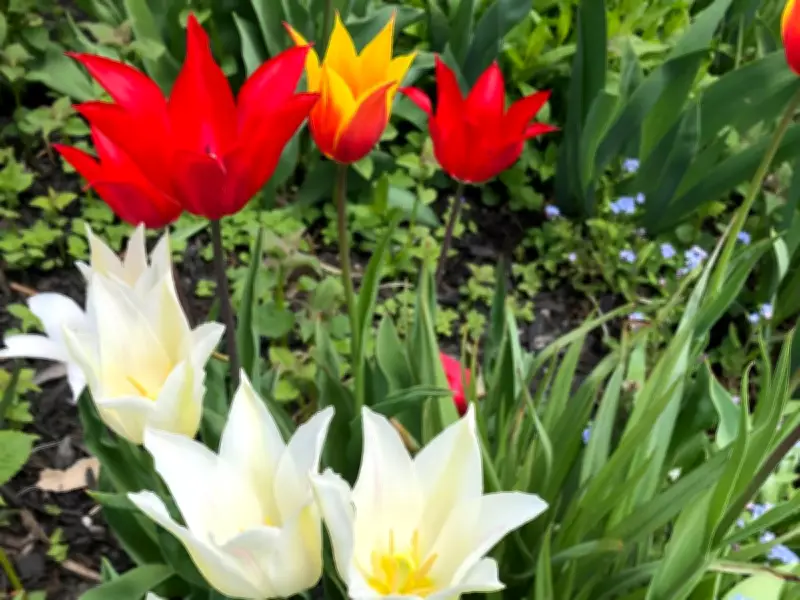
Tulips are the iconic plants that herald the shift from winter to spring, bringing smiles and delight with their vibrant colors and elegant forms. Their presence in gardens and public spaces marks the official arrival of the growing season, filling landscapes with hues of white, red, and pink that bob gracefully in the wind.
The Origin and History of Tulips
Tulips originate from central Asia, where wild varieties thrive in climates characterized by cold winters and hot summers. In their native lands, these plants were much smaller, typically displaying yellow and red flowers. Over centuries, tulips were transported throughout Europe, notably to the Netherlands, where the climate proved ideal for their cultivation.
In the Netherlands, hybridization efforts began, leading to the creation of new varieties with striking characteristics such as lily-shaped, ruffled, fringed, and single or double flower cups. Today, tulips are mass-produced in fields and distributed globally, celebrated for their grace and beauty, and they are easy to grow reliably in home gardens.

Cultural Significance and Traditions
Every year on National Tulip Day in late January, thousands of tulip bulbs are given away in the Netherlands, marking the official opening of the tulip season. Canada receives 20,000 tulip bulbs annually from the Netherlands, a tradition that started in 1945 and continues to this day. This gesture expresses gratitude for Canada's war contributions, including providing a safe haven for Dutch Princess Juliana and her children during that time.
In Ottawa, the beginning of the growing season is celebrated with blooming tulip displays that cover many public gardens. During the Canadian Tulip Festival, held from May 8 to 18, there is an explosion of blooms around Dow's Lake in Commissioners Park, along the Rideau Canal, and in downtown areas, creating a stunning visual spectacle.
Types of Tulips and Their Characteristics
Tulips are typically grouped by their blooming time and shape, offering a diverse range for gardeners to enjoy throughout the spring season.
Early Blooming Tulips
Early blooming tulips are the first to appear in the season, featuring classic cup-shaped flowers and strong stems. This makes them excellent choices for containers and windy garden locations. Double early tulips resemble peonies with layers of petals, providing a lush, full look in early spring displays.
Mid-Season Tulips
Mid-season tulips include varieties like Tulipa 'Triumph' and Darwin hybrid tulips. Darwin hybrids are particularly notable as they are hybrids that provide stronger perennial plants, returning more reliably every year. They boast bold colors and pair well with other spring bulbs, making them versatile for most home gardens.
Late-Blooming Tulips
Late-blooming tulips add drama to spring gardens with varieties such as parrot tulips, which feature ruffled, fringed petals and bold color combinations, offering an artistic touch. Miniature, low-growing tulips, like Tulipa tarda, are also late bloomers. These smaller, more delicate plants spread well and are perfect for rock gardens and containers, adding a subtle charm to outdoor spaces.
Overall, tulips not only symbolize the arrival of warmer days but also enrich gardens with their diverse forms and histories, making them a beloved feature of spring celebrations worldwide.