Three interior designers share their insights on which interior design rules are non-negotiable and which can be creatively broken to suit individual lifestyles and spaces.
Function Before Form Is a Rule Never to Break
Madeleine Sloback, founder and creative director at Madeleine Design Group in Surrey, B.C., emphasizes that the rule of function before form should never be broken. “Before choosing finishes, furniture or decor a space needs to support how you actually live. The best interiors are designed around movement, routines, storage needs, conversation areas and daily habits. A beautiful room that doesn’t function well will never feel right long term,” she says.
Samantha Muller, principal and interior designer at Kleen Design in South Surrey, B.C., agrees that function always comes first. When designing interiors for developments like townhomes and condos, she prioritizes storage and creates dedicated zones that reflect how people live while maintaining traffic flow. “You don’t want to compromise your traffic flow for esthetics,” she advises.

Good Planning Before Shopping Is Essential
Danielle Keoghan, owner of Maverick Designs in Victoria, B.C., stresses that good planning must come before shopping. “It sounds obvious: Get the right plan, understand proportions, flow and function. After that everything is easy and enjoyable. If you skip that step and buy a sectional that is too big, faces the wrong direction and blocks traffic, then you’re asking [an interior designer] to remediate a problem,” she says, noting that by that time options are usually very limited.
Keoghan named her firm Maverick Designs as a nod to questioning rules. “I’ve never been interested in spaces that are led by trends. I want to design homes that feel like the people who live in them. Rules in design aren’t wrong — the key is to understand what problem they were created to solve. Maverick is a reminder to ask which ones actually apply,” she explains.
Bending Rules in Smaller Spaces
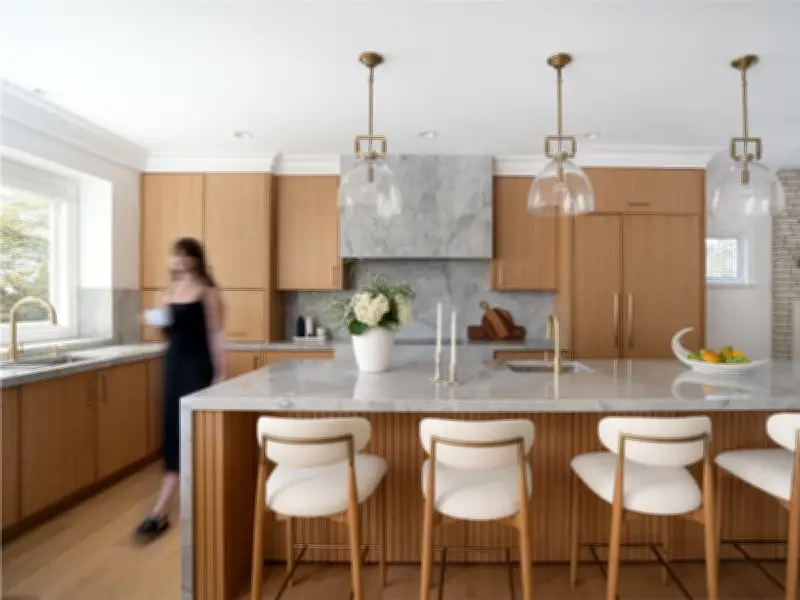
Muller notes that rules often need to bend in smaller apartments. For example, when there isn’t space for a full dining room, practical solutions like counter stools at the kitchen island or a flexible, fold-out table that can be used when needed then folded away help maintain traffic flow.
In kitchens, space planning is essential. While factors like the work triangle and clearance for appliance doors matter, one of the first considerations is the distance between perimeter cabinets and a kitchen island. Muller says these guidelines must be adapted in compact layouts.
Trends vs. Timeless Design
All three designers agree that while trends come and go—such as colour palettes, metal finishes for fixtures, and flooring tones shifting from grey to warmer options—the core principles of function, planning, and personal expression remain constant. Sloback sums it up: “A beautiful room that doesn’t function well will never feel right long term.”