Quebec Maintains Supreme Court Cannot Review Bill 21 Rights Violations
In a significant legal development, the Quebec government has asserted that Canada's Supreme Court cannot consider whether Bill 21, the province's controversial secularism law, violates constitutional rights. This position comes as the highest court prepares to hear arguments on the matter later this month.
Notwithstanding Clause as Legal Shield
Quebec's legal team argues that the government's invocation of Section 33 of the Canadian Charter of Rights and Freedoms—the notwithstanding clause—prevents judicial review of whether the law infringes on charter rights. Government lawyers stated in Monday's filing that "such a debate simply cannot take place when a legislature invokes this constitutional provision."
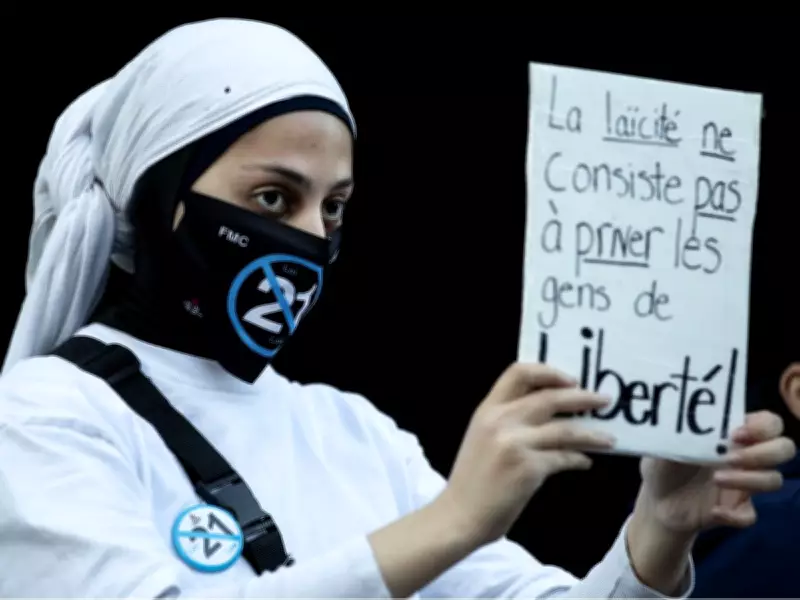
The law, officially known as Bill 21, prohibits certain public sector employees—including teachers, police officers, and judges—from wearing religious symbols while performing their duties. Quebec maintains that this legislation falls within provincial jurisdiction and is protected from constitutional challenge through the notwithstanding clause mechanism.

Supreme Court's Unusual Request
In mid-February, the Supreme Court made a rare request for additional arguments from all parties regarding whether Bill 21 violates freedom of conscience, religion, expression, and equality rights guaranteed by both the Canadian Charter and Quebec's Charter of Human Rights and Freedoms.
Eric Adams, a constitutional law professor at the University of Alberta, noted that while lower courts commonly request supplementary submissions, it's relatively unusual for the Supreme Court to do so. "This suggests the court wants to be prepared to resolve the case fully," Adams explained, adding that it shouldn't be interpreted as indicating how the court might ultimately rule.
Challengers Present Compelling Arguments
Several groups challenging the law have submitted forceful arguments to the Supreme Court. The English Montreal School Board contends that wearing religious clothing constitutes protected religious practice and expression, and that the law disproportionately affects Muslim women, thereby violating equality rights.
"All the evidence in the record indicates that Bill 21 harms women, without promoting their equality in any way," EMSB lawyers wrote. "The idea that the ban on religious symbols may somehow 'liberate' affected women finds no support in, and is contradicted by, the evidence."
In another filing, Ichrak Nourel Hak—a Muslim woman studying to become a teacher when the law was adopted—along with the National Council of Canadian Muslims and the Canadian Civil Liberties Association argued that it's an "inescapable conclusion" that the law violates religious freedom.
Their submission states: "By publicly excluding practising religious individuals from many aspects of public service, and by further emphasizing that this exclusion is mandated by Quebec's fundamental values, the law diminishes the human dignity of religious individuals."
Divergent Judicial Interpretations
The legal dispute centers on whether courts can recognize rights infringements even when the notwithstanding clause has been invoked. While Quebec's Court of Appeal ruled that courts lack this power, other jurisdictions have reached different conclusions.
Professor Adams pointed out that "the Saskatchewan Court of Appeal has found that the courts can issue a judicial declaration that rights have been infringed, even though the notwithstanding clause has been invoked. What the court will not do and cannot do is strike down the law on that basis, but they can recognize the existence of a rights infringement."
Upcoming Supreme Court Hearing
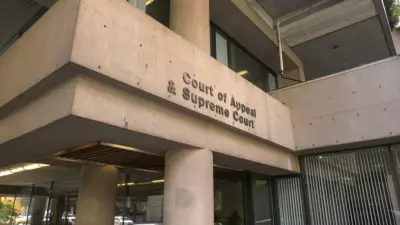
The Supreme Court is scheduled to begin hearing oral arguments on March 23 in an appeal of a Quebec Court of Appeal decision that upheld most of Bill 21. That lower court ruling struck down only the element that would have applied to members of Quebec's National Assembly, finding that the notwithstanding clause shielded nearly all of the law from judicial review.

The appeal involves multiple challengers, including the English Montreal School Board, teachers' unions, religious organizations, and individual Muslim and Sikh women who claim the law has effectively barred them from teaching positions in Quebec.
Quebec's government maintains that if the Supreme Court determines it can examine potential constitutional rights violations, it should refrain from doing so because the province's defense has followed existing Supreme Court precedents. Government lawyers argued that evidence regarding rights violations is "irrelevant and useless" given the notwithstanding clause's protection.
These new filings supplement the main arguments already submitted by the parties and a record number of interveners, many of which rely on legal arguments that don't invoke charter rights subject to the notwithstanding clause override.