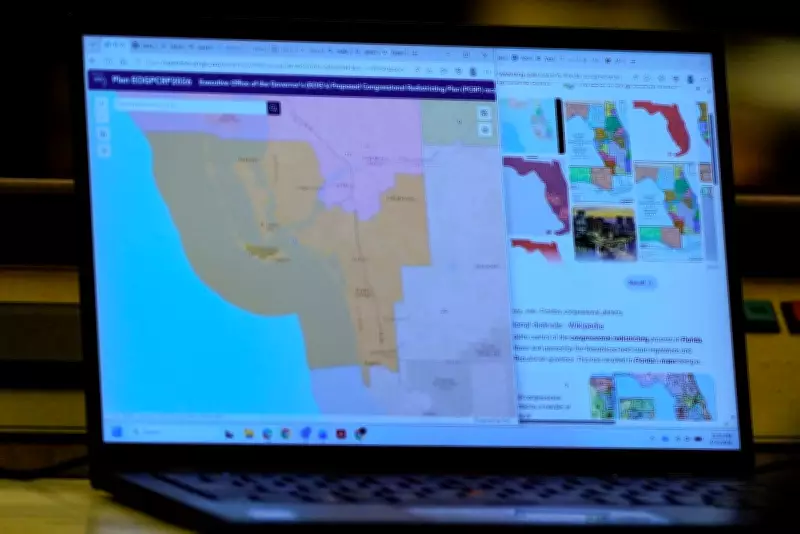
A U.S. Supreme Court ruling on race-based redistricting has prompted swift action in several states, including Florida, where lawmakers are debating a new congressional redistricting plan. The ruling, issued on April 29, 2026, addresses the use of race in drawing electoral districts, a contentious issue that has sparked legal battles across the country.
Florida Takes Immediate Action
In Tallahassee, Florida, state senators displayed a proposed congressional redistricting plan during debate on SB 8-D, a redistricting bill, during a special legislative session. The plan aims to comply with the Supreme Court's decision, which restricts the use of race as a predominant factor in redistricting. Governor Ron DeSantis called the special session to ensure the state's maps meet constitutional standards.
Other States Respond
Beyond Florida, other states are also moving to adjust their district lines. Legal experts anticipate challenges to existing maps in states like Texas, Georgia, and North Carolina, where race has historically played a role in drawing boundaries. The ruling is expected to shift the balance of power in some congressional districts ahead of the 2026 midterm elections.

Implications for Future Elections
The Supreme Court's decision clarifies that while race can be considered, it cannot be the primary driver in redistricting. This has implications for minority representation, with some advocates arguing the ruling could dilute the voting power of communities of color. Conversely, proponents say it promotes fairness by preventing gerrymandering based on race.
As states scramble to redraw maps, the political landscape for upcoming elections remains uncertain. The ruling underscores the ongoing debate over voting rights and representation in the United States.