Canada's $150 Billion Defense Challenge: Building a Sovereign Military Industry
Prime Minister Mark Carney expressed measured satisfaction when Canada achieved the North Atlantic Treaty Organization's defense spending benchmark of two percent of gross domestic product in March 2026. This milestone marked the first time in decades that Canada crossed this threshold, accomplished through a rapid spending acceleration that included significant budget increases and strategic accounting adjustments.
The Path to Five Percent
The federal government added $9.3 billion to its defense budget in June 2025, pushing total annual expenditures beyond $61 billion. However, reaching NATO's more ambitious target of spending five percent of GDP on defense by 2035 presents a substantially greater challenge. This objective could require Canada's annual defense expenditures to more than double to approximately $150 billion within the next decade.
The government's Defense Industrial Strategy, released in February 2026, establishes a parallel goal alongside this spending increase. The strategy aims to direct seventy percent of defense spending to Canadian companies, guided by a Build-Partner-Buy framework that prioritizes domestic suppliers before considering international options.

Procurement Hurdles and Capacity Limitations
Achieving the ambitious aim of building a truly sovereign defense sector at scale requires Ottawa to overcome numerous challenges. Industry observers point to cumbersome existing procurement policies, continued reliance on suppliers in the United States and other allied nations for high-end equipment, and ambiguity surrounding what qualifies as a Canadian company.
David Perry, president of the Canadian Global Affairs Institute think tank, noted that the strategy represents a clear departure from previous policy approaches. "Previously, if you were registered in Berlin or Barrie, Ontario, you were basically treated the same. There was no preference being indicated for the firm being Canadian in terms of selection," Perry explained.
"One way to read the industrial strategy is that our default setting is going to switch from fair, open and transparent competition to fair, open and transparent competition, but buying Canadian as a first choice," he added.
Industrial Base Realities
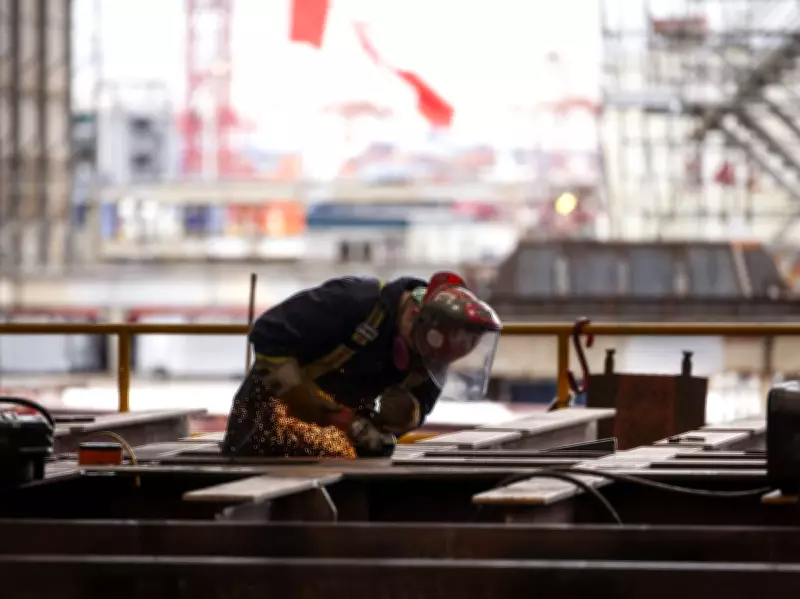
The existing limitations within Canada's defense industrial base are already evident. While Canadian companies possess capabilities in constructing warships, satellites, armoured vehicles, and advanced sensor systems, they have not manufactured fighter jets, main battle tanks, or howitzers for multiple decades.
Perry emphasized that this strategic shift could prove significant but will not eliminate the necessity of purchasing certain equipment from international sources. "There is always going to be an element of purchases that go offshore," he stated. "Today, we don't have the capacity to produce everything the military needs, and the military requires urgent replacement in several areas. We cannot wait multiple years to develop Canadian capacity for all necessary equipment."
Accounting Adjustments and Future Implications
Reaching the initial two percent NATO benchmark relied partially on how defense expenditures were calculated. Ottawa incorporated agencies such as the Canadian Coast Guard into the defense department's financial records while simultaneously increasing military compensation and accelerating investment in base upgrades and infrastructure improvements.
The fundamental question remains whether a "buy Canadian" default can genuinely foster a new tier of domestic defense manufacturing giants. The success of this ambitious industrial strategy will depend heavily on implementation details, capacity building timelines, and the government's ability to streamline procurement processes while maintaining necessary military capabilities during the transition period.