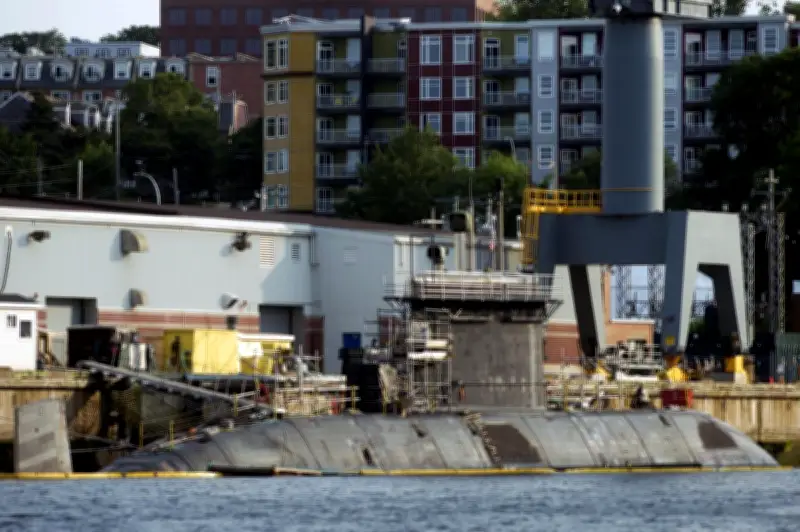
OTTAWA — Despite many observers praising Ottawa's move to replace its outdated and decrepit submarine fleet, defence experts warn Ottawa's sluggish procurement framework leaves Canada facing a dangerous capability gap, according to a report by the Toronto Sun.
Expert warns of capability gap
On Monday, Prime Minister Mark Carney named Germany's ThyssenKrupp Marine Systems (TKMS) as the preferred provider for Canada to purchase up to 12 new diesel-electric Type 212CD submarines, with the first four boats expected to be delivered by 2034. Carney added that the Royal Canadian Navy will continue using its obsolete, half-century-old Victoria-class submarines into the next decade.
That, says Macdonald-Laurier Institute Senior Fellow and former Defence Minister Policy Director Joe Varner, represents a risky gamble for Canada — considering that only one of Canada's four remaining submarines is considered seaworthy.

"I don't think there's any doubt that you're going to see a capability gap between the Victoria class and the follow-on submarines," Varner told the Toronto Sun.
Procurement delays risk national security
Varner criticized Canada's tendency to delay major defence acquisitions. "This country has an awful tendency to foot-drag, be slow and really put itself in a space where it faces a rust-out and then has to try and rebuild capability," he said.
While Varner said a new fleet of subs are invaluable in protecting Canada's Arctic approaches, the anticipated 2034 delivery date doesn't offer much help to Canada in the meantime. "The perception of threats in this country is really concerning," he added.
"All of our NATO allies are talking about the Russians being in a position to fight another major conventional war by 2029 — that's three years away. In the Pacific, the Chinese are right now rehearsing naval blockade drills around Taiwan, and they're mapping underwater for submarine operations."
That, coupled with China's recent unannounced test of submarine-based ballistic missiles and renewed tensions in the Persian Gulf, means there's no shortage of threats facing Canada that the government doesn't appear too concerned with.
Stealth advantage of new subs
Varner also addressed the debate over nuclear versus conventional submarines for Arctic operations. "There's always the debate over nuclear versus conventional when it comes to operating in and around the Arctic," he said, adding that while nuclear boats are capable of operating under Arctic ice for an indefinite period, operations under the ice cap tend to be noisy and bring their own challenges.
"The advantage of these submarines is their stealth and ability to sneak up on an opponent submarine," he continued. "If you're a Chinese or Russian military planner, planning to operate submarines in the Arctic — I think that you're going to be very concerned if Canada has 12 Type 212CD submarines sitting there waiting for you."