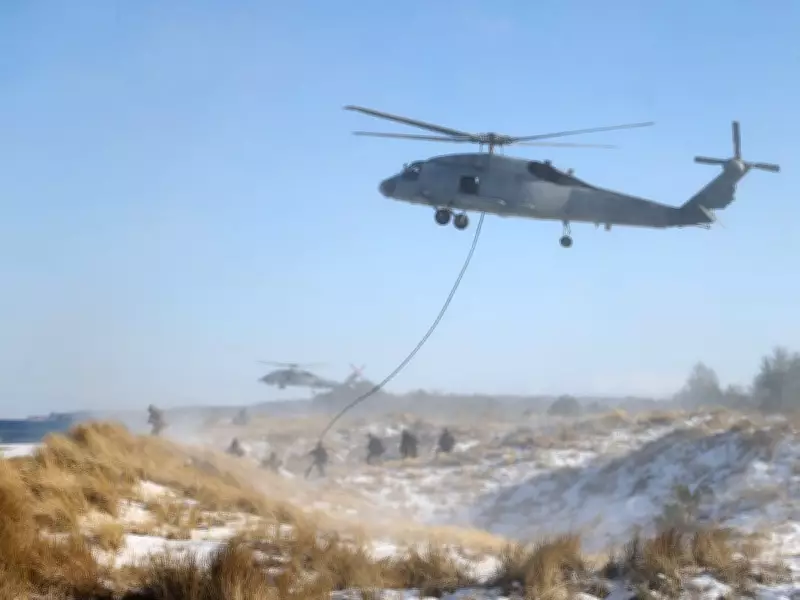
In a powerful display of military readiness, around 3,000 NATO troops stormed a Baltic beach in Germany on Wednesday as part of a major exercise explicitly designed to deter Russian aggression. The drill, conducted at the Putlos training ground near Kiel, involved forces from Spain, Turkey, and Germany, showcasing the alliance's unity and rapid deployment capabilities.
Show of Force on the Baltic Coast
Under the command of German General Ingo Gerhartz, the exercise featured a coordinated assault involving German Eurofighter jets, 15 naval vessels, Spanish combat divers, and Turkish units utilizing Zaha amphibious assault vehicles. This complex operation formed a critical component of the broader Steadfast Dart 2026 exercise, which tests NATO's ability to swiftly move troops across alliance territory.
High-Level Observations and Warnings
German Defence Minister Boris Pistorius, who observed the maneuver firsthand, emphasized that the exercise demonstrated NATO's united front and operational readiness. "Particularly in the Baltic Sea, the security situation has worsened dramatically," Pistorius stated, adding that such exercises prove "we are serious about deterrence."

The German military's top general, Carsten Breuer, reinforced this message by highlighting the "real threat" facing Berlin and its NATO allies. "Russia continues to orient its armed forces westward," Breuer noted, explaining that drills like the Putlos exercise also carry significant "diplomatic effect" in signaling resolve to potential adversaries.
Context of Rising Tensions
The exercise occurs against the backdrop of Moscow's ongoing full-scale invasion of Ukraine, now approaching its fourth year, which has heightened concerns that Russia might eventually use force against European NATO members. European governments have additionally raised alarms about what they describe as Russia's increasing malign activities across the continent, including:
- Sabotage of railway lines in Poland
- Arson attacks in multiple countries
- Cyberattacks targeting critical infrastructure
Scope and Significance of Steadfast Dart 2026
The Putlos drill represents just one element of the multinational Steadfast Dart 2026 exercise, which runs from January through March and involves approximately 10,000 troops from 11 European NATO member states. Notably, about 7,300 of these personnel are deployed within Germany alone, though no American soldiers are participating in this particular phase.
Defence Minister Pistorius dismissed suggestions that the absence of U.S. troops indicated transatlantic tensions, characterizing it as "completely normal" and attributing it to standard rotation systems within NATO's operational planning.
Testing NATO's Rapid Response Capabilities
Steadfast Dart marks the largest maneuver to date for NATO's Allied Reaction Force (ARF), a rapid-response formation established in 2024. In crisis situations, the ARF is designed to deploy up to 40,000 troops within just 10 days, pending approval from the alliance's North Atlantic Council. This exercise therefore serves as a crucial test of NATO's ability to respond swiftly to emerging threats along its eastern flank.
The Baltic region has become an increasing focus of NATO's defensive preparations as Russia continues to strengthen its military presence in Western-facing territories. Exercises like Steadfast Dart 2026 not only enhance interoperability among member states but also send a clear message about the alliance's commitment to collective defense in the face of evolving security challenges.