In a series of compelling letters to the editor, readers of the Ottawa Citizen have issued a stark warning about Canada's national security and economic future. The central concern revolves around the nation's vast, undefended borders and coastlines at a time of shifting global alliances and potential American unpredictability.
A Call to Fortify Canadian Sovereignty
The debate was ignited against the backdrop of two significant geopolitical developments. First, during a visit to Beijing on Thursday, January 20, 2026, Prime Minister Mark Carney signed six initial cooperation agreements with China, covering energy, crime, culture, forestry, and food safety.
Simultaneously, several NATO nations—including France, Germany, Sweden, Norway, Finland, the Netherlands, and the United Kingdom—deployed troops on a reconnaissance mission to Greenland. This move, described as a "trip-wire," signals NATO's readiness to defend Greenland with or against the United States, directly challenging former President Donald Trump's past interest in acquiring the territory.

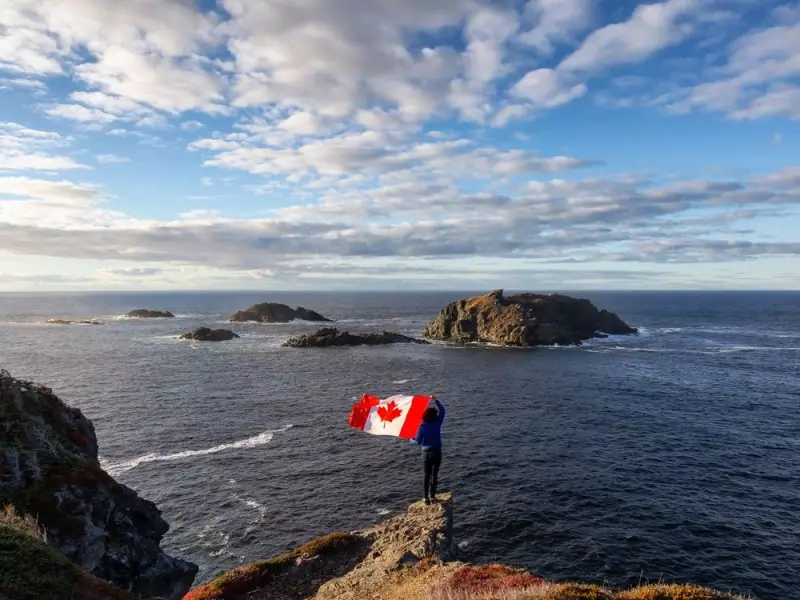
Letter writer Mike Priaro of Calgary, Alberta, connects these events to Canada's own vulnerabilities. He emphasizes that with the world's longest undefended international border at 8,893 kilometres and the planet's longest coastline, stretching over 202,000 kilometres, Canada is critically exposed.
"Canada critically needs to step up its military presence, defensive capabilities, technology development, and diversity of export markets if Canada is to remain a sovereign democratic nation ruled by law," Priaro argues.
Economic Diversification: Beyond Cars and Canola
The trade dimension of sovereignty also drew sharp commentary. Another reader, John D. Burke, a former news reporter and consultant from Riverview, New Brunswick, who splits his time with Costa Rica, offered a contrasting perspective on electric vehicles (EVs).
Burke notes that while Ontario Premier Doug Ford and others rail against Chinese EV imports to protect the traditional auto sector, his personal experience in Costa Rica reveals a different path. There, with no domestic carmakers, the green-focused country imposes heavy taxes on gas vehicles while allowing EVs in duty-free.
After purchasing a Chinese EV sight-unseen for his Costa Rican home, Burke found it to be "solid, safe, strong and reliable," with a maximum range of 400 km. He views Prime Minister Carney's new trade agreements with China—which he characterizes as a "'cars for canola' trade policy"—as a welcome, if initial, step toward diversifying Canada's economic partnerships beyond the United States.
Standing with Allies Against Unreliable Partners
The letters collectively underscore a deep-seated anxiety about over-reliance on the United States. One reader explicitly labels the U.S. under Trump as "a rogue nation: totally unreliable and outside the community of nations."
This sentiment fuels the argument that Canada cannot trust its southern neighbour to be its sole major trade and economic partner. The reader draws a direct parallel between Trump's approach to Greenland and Russia's actions in Ukraine, stating, "We must stand with the Greenlanders and Denmark against this unbelievable behaviour at all cost, with all efforts."
The overarching message from citizens is clear: in a world where traditional alliances are being tested and economic dependencies can become vulnerabilities, Canada must take decisive and independent action to secure its borders, its economy, and its role on the global stage.