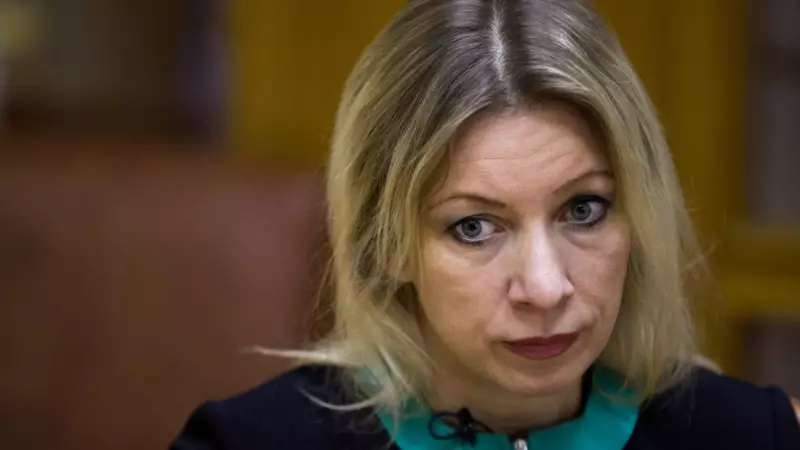
Russia has issued a direct challenge to Western narratives concerning the Arctic, calling for an end to claims that it and China represent a threat to Greenland. The statement was delivered by Russian Foreign Ministry spokeswoman Maria Zakharova on Thursday, January 15, 2026.
Moscow's Firm Rejection of Western Allegations
In a clear rebuttal to ongoing diplomatic discourse, Russian officials have explicitly demanded that Western powers halt their assertions of a coordinated threat from Moscow and Beijing towards the vast Arctic island of Greenland. The Russian position frames these claims as baseless and part of a broader pattern of misinformation.
The statement, delivered by the prominent and often outspoken spokeswoman Maria Zakharova, represents a formal diplomatic pushback. It underscores the escalating tensions between Russia and Western nations over influence and security in the strategically vital Arctic region, where melting ice is opening new shipping routes and access to resources.

The Geopolitical Stakes in the Arctic
Greenland, an autonomous territory within the Kingdom of Denmark, has become a focal point of international interest. Its geographic position and mineral wealth make it a significant piece in the complex puzzle of Arctic geopolitics. Western analysts and governments have frequently expressed concern over perceived efforts by both Russia and China to expand their economic and military footprints in the area.
Russia's latest declaration seeks to directly counter this narrative. By publicly demanding the West "stop claiming" a threat exists, Moscow is attempting to reframe the conversation and portray itself as a responsible Arctic stakeholder, rather than an aggressor. This move is seen as part of a wider information campaign to legitimize its activities in the High North.
Implications for International Relations
This development is likely to further complicate diplomatic relations between Russia and NATO members, particularly those with Arctic coastlines like Canada, the United States, and Denmark. It highlights the deepening divide in how security challenges in the region are perceived.
For Canada, a nation with vast Arctic sovereignty claims, the rhetoric from Moscow reinforces the need for a vigilant and coordinated northern strategy with allies. The statement from January 15, 2026, serves as a reminder that the peaceful Arctic of the past is increasingly a zone of strategic competition and diplomatic friction, where narratives and perceptions are actively contested by global powers.