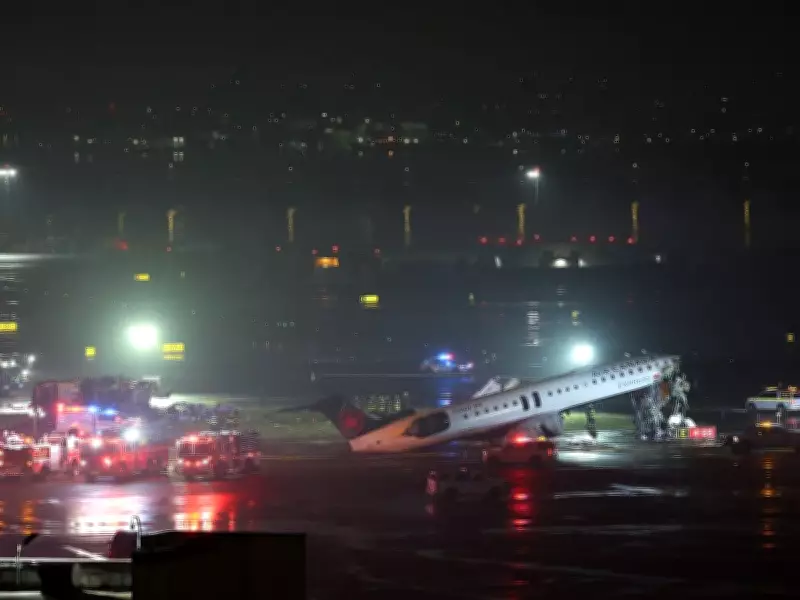
One of the operators of a fire truck at LaGuardia Airport in New York recalled hearing the words 'stop, stop, stop' but did not know who the instruction was intended for, moments before the vehicle was struck by an Air Canada Express jet in March, according to a preliminary report from the U.S. National Transportation Safety Board (NTSB).
The report, released on Thursday, also noted that runway entrance lights, which illuminate red to warn that a runway is in use, were on until about three seconds prior to the collision. The accident resulted in the deaths of both pilots on the Air Canada plane, which was operated by Jazz Aviation LP and carried 76 people.
Sequence of Events
The fire truck was responding to a different emergency on a United Airlines Holdings Inc. flight after pilots reported an unusual odour coming from the cabin. The truck, operated by two first responders, requested clearance to cross runway 4, where the Air Canada jet was due to land, and was given the go-ahead by air traffic control.

Shortly after that, a controller could be heard telling the truck driver to stop. Later, what sounds like the same controller said, 'I messed up,' when discussing the matter with another pilot.
According to the NTSB's report, the truck operator heard another transmission from air traffic control and realized the order was for him, but at that point had entered the runway. 'He further recalled that as they turned left, he saw the airplane's lights on the runway,' the report said.
Investigation Continues
The latest revelation from the NTSB offers another clue as to why the Air Canada jet slammed into the vehicle as it was crossing the active runway. The collision killed both pilots and injured several passengers. The NTSB continues to investigate the incident, examining factors such as communication protocols, runway lighting systems, and human performance.
This crash has raised questions about safety procedures at major airports, particularly regarding coordination between air traffic control and ground vehicles. The NTSB's final report is expected to include recommendations to prevent similar accidents in the future.