Carney's Evolving Trade Rhetoric Sparks Uncertainty
As Canada prepares for critical negotiations with the United States regarding the Canada-U.S.-Mexico Agreement (CUSMA), confusion reigns regarding the nation's strategic position. This uncertainty stems primarily from Prime Minister Mark Carney's frequently shifting public statements and policy declarations on how to approach President Donald Trump's administration.
A Timeline of Contradictory Positions
The prime minister's journey from candidate to leader reveals a pattern of significant reversals on trade strategy. In January 2025, during the Liberal leadership race, Carney advocated for aggressive retaliation, stating that "dollar-for-dollar retaliatory tariffs by Canada should be a given" and should target areas where the U.S. would feel the impact most severely.
However, by March 2025, having assumed the role of prime minister, Carney reversed this stance. He publicly acknowledged the economic disparity between the two nations, noting "there is a limit to matching these tariffs dollar-for-dollar given the fact our economy is a tenth the size of the United States." This marked the first major pivot in his approach.

Campaign Promises Versus Governing Reality
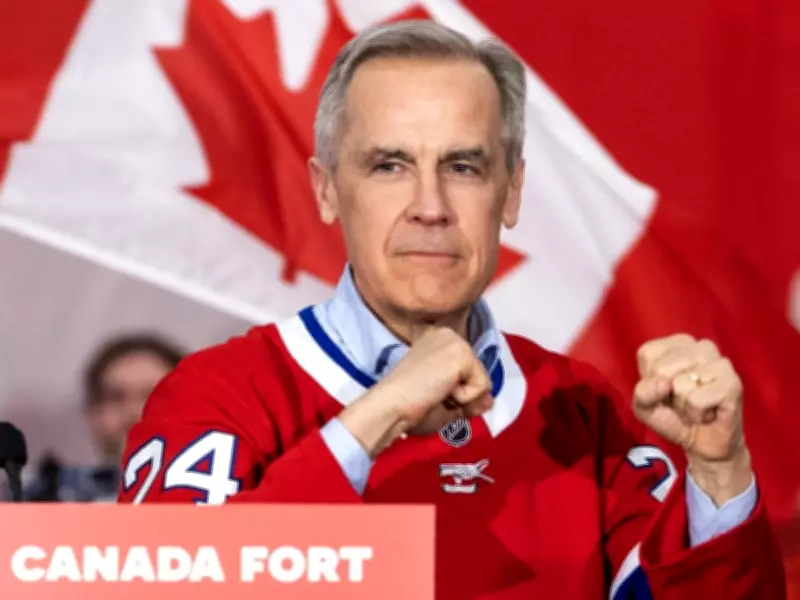
The Liberal election campaign further complicated the narrative. A campaign advertisement released in March 2025 featured Carney alongside comedian Mike Myers at a hockey rink, with both declaring the Liberals' strategy would be "Elbows Up!" when dealing with Trump. An April campaign pledge reinforced this tough stance, promising that "a Mark Carney-led government will stand strong against President Trump's tariffs."
Following the election, the tone shifted toward diplomacy. A June 2025 Prime Minister's Office release announced that Carney and Trump, meeting at the G7 Summit in Kananaskis, Alberta, had "agreed to pursue negotiations toward a deal within the coming 30 days." Finance Minister Francois-Philippe Champagne soon announced Canada would rescind its Digital Services Tax in anticipation of a comprehensive trade arrangement.
Missed Deadlines and Diminishing Expectations
Despite these diplomatic overtures, negotiations stalled. The initial July 21, 2025 deadline passed without an agreement, as did a subsequent August 1 deadline. By mid-July, Carney conceded in French-language remarks that a tariff-free deal appeared unlikely, citing "not a lot of evidence right now" that the U.S. was willing to make such an agreement.
In a practical move that August, Carney's government ended most Canadian counter-tariffs on CUSMA-compliant goods, matching U.S. exemptions. However, significant sectoral tariffs on steel, aluminum, and automobiles remained in place for both nations.
Conflicting Assessments of Progress
Public statements from Canadian officials presented conflicting pictures of the negotiation status. In July 2025, Washington ambassador and chief trade negotiator Kirsten Hillman told The Globe and Mail that the government was still aiming to have all of Trump's tariffs lifted as part of a deal. Yet Carney's subsequent comments suggested much lower expectations.
By October 2025, facing opposition questions in Parliament about his Oval Office meeting with Trump, Carney offered an optimistic assessment. He declared that Canada already had "the best deal with the Americans" under CUSMA and promised, "we will get an even better deal." He insisted negotiations were ongoing for "further gains in major sectors" and assured Canadians, "this is not just words. We will get a deal."
External Factors and Final Stalemate
The negotiation process faced additional complications from domestic politics. In December 2025, Carney suggested that an anti-tariff advertisement by Ontario Premier Doug Ford, which quoted former U.S. president Ronald Reagan, had disrupted the talks. Carney claimed, "We were close to an agreement" before the ad's release caused negotiations to stall.

This series of evolving positions, missed deadlines, and conflicting statements has created substantial uncertainty about Canada's trade strategy. Observers are left questioning whether Carney's approach represents pragmatic adaptation to complex negotiations or inconsistent leadership on a critical economic issue. The prime minister's shifting rhetoric continues to shape the public's understanding of where Canada stands in these pivotal discussions with its largest trading partner.