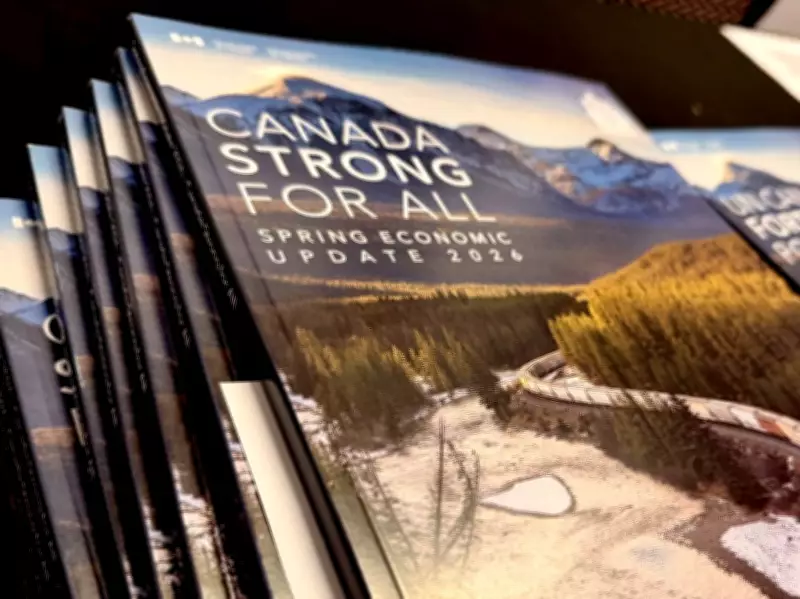
The Carney government's spring economic update, often referred to as the mini-budget, delivers a clear message: the federal government is financially stable, even if many Canadians are not. Released on April 28, 2026, the update forecasts a revenue windfall of $36 billion over five years, averaging $7.2 billion annually. This boost is largely driven by higher personal and corporate income tax revenues, partly due to rising oil prices.
Spending Exceeds Revenue Gains
Despite the revenue increase, the Liberals plan to spend even more—$37.5 billion over six years—on enhanced affordability measures. While these initiatives may provide marginal relief for some Canadians, the mini-budget fails to tackle the country's growing long-term debt.
The government highlights a reduction in the annual federal deficit from $78.3 billion in the November 2025 budget to $66.9 billion for the 2025-26 fiscal year. However, this is a familiar tactic: overestimating deficits early to appear fiscally responsible later. The Jean Chrétien and Paul Martin Liberals employed this strategy regularly.

Projected Deficits and Rising Debt
From now until 2030, the Carney government projects deficits nearly identical to those in the November budget. This will add an estimated $295.5 billion to Canada's total public debt, which is set to rise from $1.4 trillion this year to $1.63 trillion by 2030, including government assets.
This year, taxpayers will pay $58.7 billion in interest on the federal debt—an amount exceeding the $57.4 billion transferred to provinces for health care. Notably, interest payments do not reduce the principal debt.
No Balanced Budget Plan
The economic update pledges to balance the federal operating budget by 2028-29, a key commitment from Prime Minister Mark Carney. However, the parliamentary budget office (PBO) disputes this, arguing that the government improperly reclassified $94 billion in operating expenditures—30% of planned spending—as capital investments in the November 2025 budget. Proper accounting, the PBO states, shows Carney will not meet his operating budget balance target.
The mini-budget does not outline a strategy to address Canada's long-term fiscal challenges, leaving the nation on a path of increasing debt and interest costs.